Aerodynamic Crossovers: Cycling Apparel Insights Driving Swimwear Innovations for Drag Reduction
Frankie Keller · Aug 26, 2026
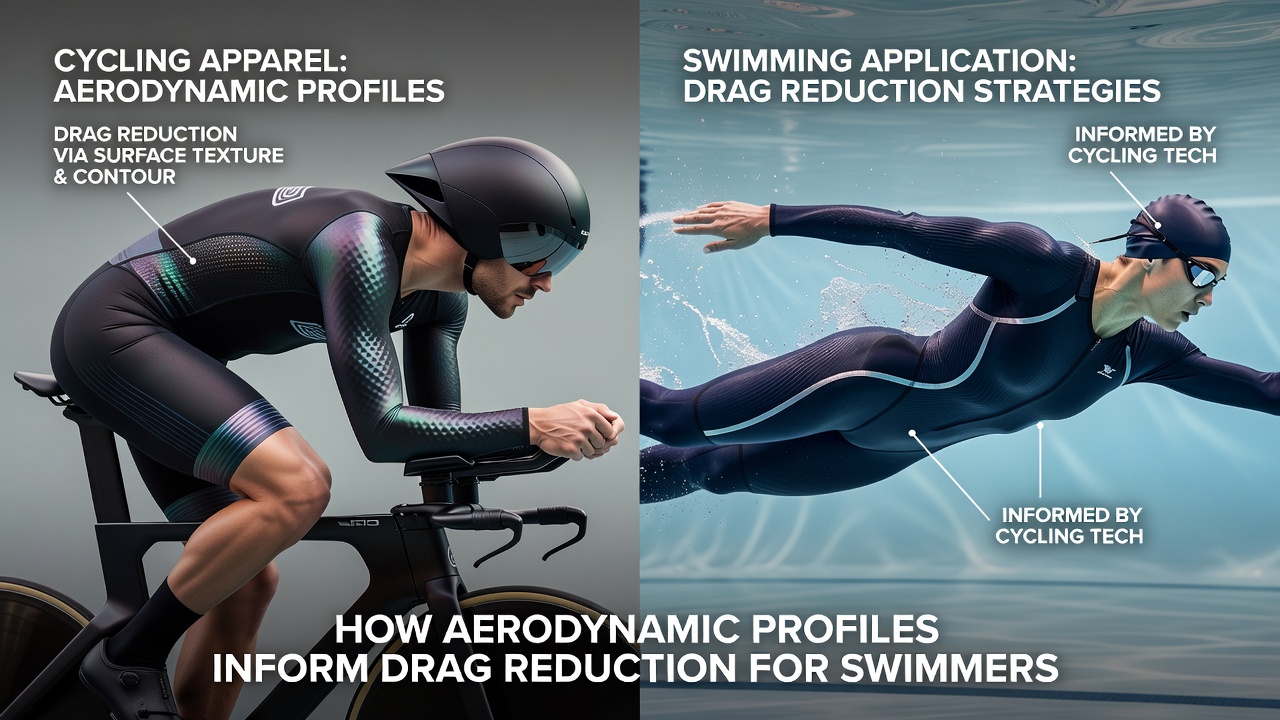
Aerodynamic Crossovers: Cycling Apparel Insights Driving Swimwear Innovations for Drag Reduction
Designers in cycling have long utilized seamless constructions and textured surfaces to manage airflow, and these same concepts find application in swimwear where water flow needs similar control because both environments involve fluid dynamics that create resistance against forward motion. Researchers have documented how body positions, fabric textures, and compression elements reduce turbulence in air, while parallel studies explore those adaptations for water-based competitions where drag coefficients determine performance margins.
Core Principles of Fluid Resistance in Both Sports
Competitive cyclists benefit from apparel that smooths airflow over the body, and data from wind tunnel tests show reductions in drag force when seams are minimized and fabrics include specific dimpling patterns. Observers note that swimmers encounter comparable challenges in water, where boundary layer management affects speed through the pool, and engineers have adapted those cycling-derived textures to create swim caps and suits that channel flow more efficiently. Studies conducted at institutions across North America and Europe reveal that surface roughness calibrated for air can translate to water when scaled appropriately for density differences, allowing multi-sport equipment developers to share testing protocols.
One study revealed that cyclists wearing textured sleeves experienced measurable drag decreases at certain yaw angles, and the same principle has informed shoulder and torso panels in elite-level swimsuits tested in flume facilities. Those who've examined both sports recognize that Reynolds number calculations help predict when laminar flow transitions to turbulent, which guides fabric selection in both cycling jerseys and competitive swimwear.
Design Elements Transferred from Road to Pool
Manufacturers apply compression mapping developed for cycling postures to swimming bodies, creating graduated pressure zones that stabilize muscles while reducing water eddies around joints. Data indicates that these zones, first refined through bicycle saddle and handlebar integrations, now appear in full-body swim garments that maintain alignment during stroke cycles. Fabric engineers incorporate polymer blends originally tested for moisture wicking in cycling apparel, yet these materials also shed water faster when used in pool environments.
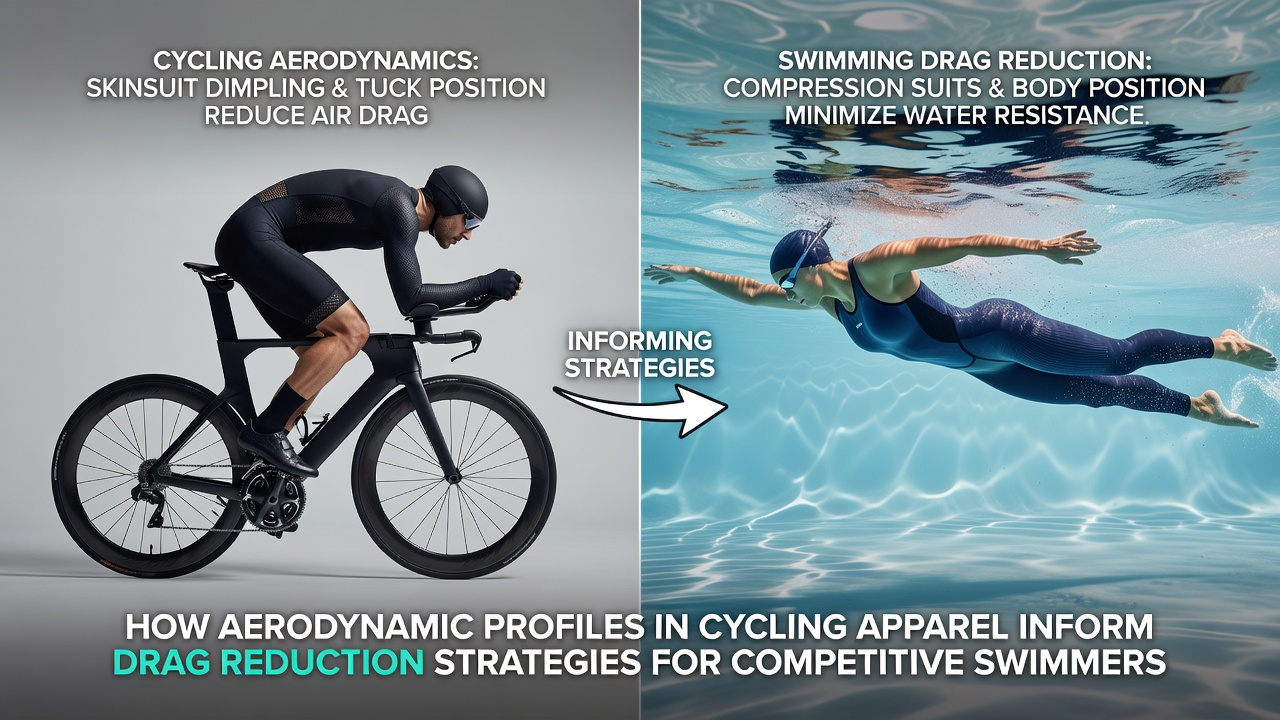
Panels that wrap around the torso in cycling suits to prevent fabric flutter have been mirrored in swim designs, where they prevent suit movement that would otherwise increase form drag. Research from the Australian Institute of Sport highlights how such adaptations contributed to measurable improvements in glide efficiency during underwater phases, and similar findings appear in reports from Canadian sport science centers examining multi-discipline training programs. Athletes in events held during August 2026 have access to updated models that integrate these refinements, with governing bodies tracking performance data to assess equipment consistency across disciplines.
Testing Methods and Data Sharing Between Disciplines
Wind tunnel protocols used for cycling helmets and frames now extend to swimmer mannequin testing, where scaled models measure water resistance at various attack angles. Figures from combined aero-hydrodynamic facilities show that dimple patterns optimized for cycling jerseys at 40 kilometers per hour produce analogous benefits when applied to swimwear at competition velocities. Industry groups coordinate with academic labs to publish shared datasets, allowing designers to iterate without duplicating baseline experiments.
Case examples include teams that equipped cyclists and swimmers with identical sensor arrays to compare force readings across media, and results demonstrated transferable thresholds for acceptable turbulence levels. Those patterns have informed rule updates by international federations that monitor equipment fairness while permitting innovation grounded in verified fluid mechanics.
Future Directions in Cross-Sport Equipment Development
Advances in 3D knitting technology, first scaled for custom cycling fits, now produce swim garments with integrated channels that direct flow along the body line. Data collected through these methods continues to refine predictions about how minor surface alterations affect overall resistance, and collaborative projects between apparel brands and research institutions accelerate the transfer of findings. Observers note that regulatory frameworks in different regions encourage documentation of material performance to maintain competitive equity.
Conclusion
Connections between cycling apparel aerodynamics and swimming drag reduction rest on shared fluid dynamics principles, with documented transfers of texture, compression, and seam strategies yielding measurable outcomes in both fields. Ongoing research supports continued refinement as testing protocols and material science progress, providing athletes with equipment informed by evidence across sports.