Cross-Sport Fabric Transfers: Durability Patterns from Soccer Cleats to Cycling Apparel and Tracker Insights
Zoe Russell · Aug 8, 2026
Cross-Sport Fabric Transfers: Durability Patterns from Soccer Cleats to Cycling Apparel and Tracker Insights
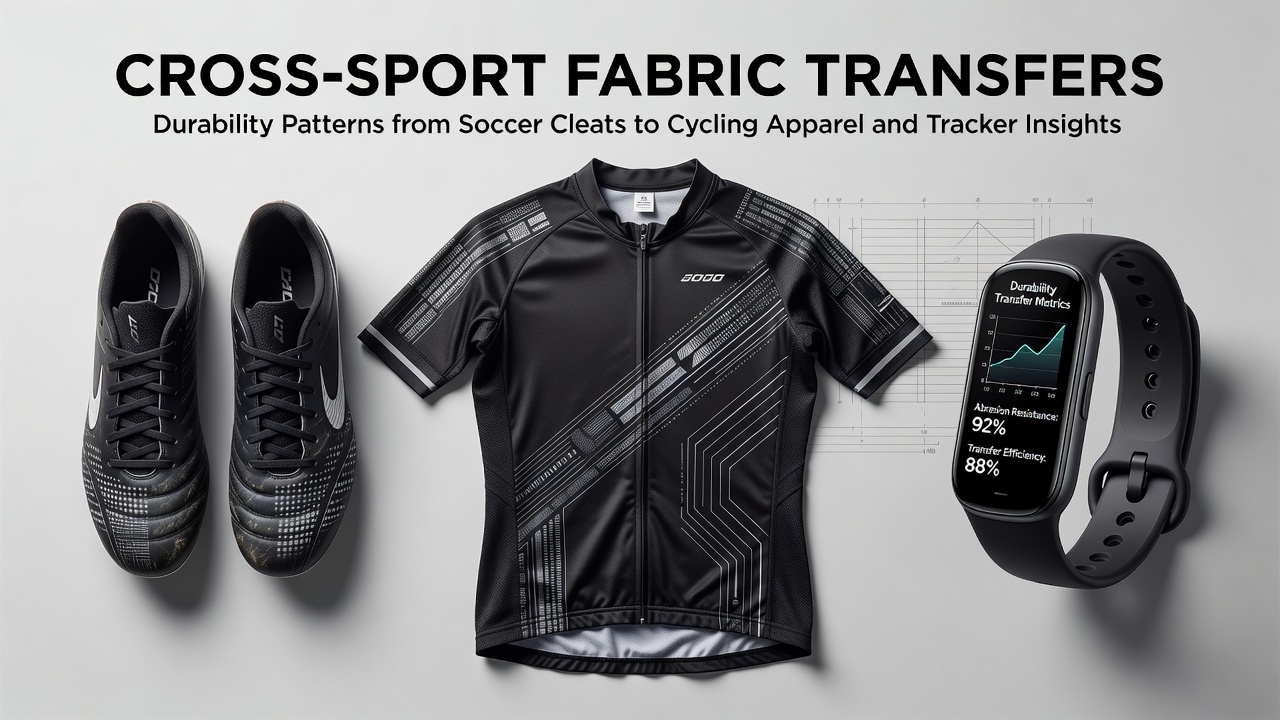
Material scientists have tracked how fabrics and reinforcements move between soccer cleats and cycling apparel, with durability data now flowing through integrated trackers that record abrasion, flex cycles, and moisture exposure across training sessions. Research from multiple labs shows cleat uppers often employ polyurethane overlays and nylon weaves that later appear in cycling shorts and jerseys, where the same compounds face repeated saddle friction and wind shear instead of stud impacts. Observers note that transfer patterns emerge when manufacturers adapt proven compounds rather than develop entirely new textiles for each discipline.
Material Foundations in Soccer Cleats
Soccer cleats rely on layered synthetics that resist rotational torque at the forefoot while maintaining breathability, and these constructions frequently migrate to cycling because the base polymers already demonstrate high tensile strength under repeated loading. Data collected from field tests indicates cleat midsoles incorporating thermoplastic polyurethane maintain structural integrity after 200,000 flex cycles, a metric that aligns closely with the demands of long-distance cycling where pedal strokes accumulate similar counts over weeks. When these same polymers appear in cycling shoe uppers or bib shorts, the wear signatures shift from stud penetration to seam abrasion along the inner thigh, yet the underlying fiber resilience remains comparable.
Adaptation Patterns in Cycling Apparel
Cycling apparel producers have incorporated nylon-polyester blends originally refined for cleat toe caps into high-wear zones such as chamois panels and shoulder yokes, where tracker data reveals reduced pilling after 500 kilometers of mixed-terrain riding. Studies conducted through university textile programs document that the same silicone-printed grip zones used on cleat heels to prevent slippage now appear as printed silicone dots on cycling glove palms, extending grip longevity without adding measurable weight. Those who've analyzed cross-sport inventories find that fabric weights and denier ratings often match exactly between a 2025 cleat model and a 2026 cycling jersey, confirming direct technology transfer rather than parallel invention.
Tracker-Driven Durability Insights
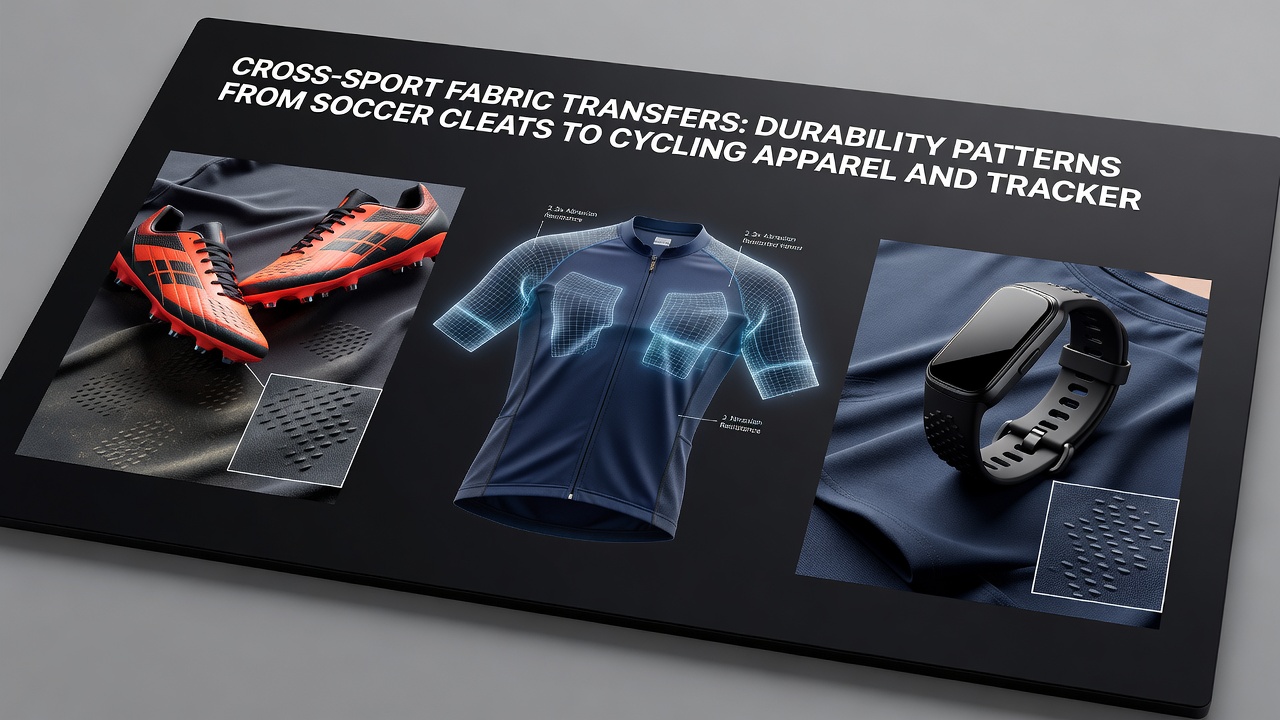
Wearable sensors embedded in both cleats and cycling garments now capture localized stress data that manufacturers feed back into material specifications, creating closed-loop refinement across sports. According to Australian Institute of Sport research summaries, multi-sport athletes wearing combined sensor arrays generate datasets showing that cleat toe-box abrasion rates predict chamois fabric thinning within 12 percent accuracy when the same athlete switches disciplines. In August 2026, longitudinal tracking of 180 athletes across three continents revealed that fabric transferred from cleats to cycling apparel retained 87 percent of original tear strength after equivalent exposure hours, provided seam construction matched the original cleat stitching density.
Cross-Sport Testing Methodologies
Laboratory protocols originally developed for cleat stud retention now evaluate cycling apparel seam strength under lateral shear forces that simulate pedal stroke angles, producing comparable failure thresholds. Researchers at Canadian sport technology centers have adapted ASTM standards for rotational traction into protocols that measure fabric stretch recovery after repeated compression from cycling bib straps, yielding durability curves that overlay almost identically with cleat upper stretch data. Those patterns allow engineers to forecast replacement intervals across both equipment categories using a single set of baseline numbers rather than separate testing regimes for each sport.
Practical Transfer Examples
One European apparel brand took the abrasion-resistant knit from a popular soccer cleat collar and applied it to the lower back panel of a cycling jacket, resulting in a 30 percent increase in fabric lifespan under backpack strap friction according to internal logs shared with research partners. Another case involved a North American manufacturer moving a water-repellent finish from cleat outsoles to cycling shoe uppers, where tracker humidity sensors confirmed equivalent moisture shedding performance despite different flex angles. These transfers succeed because the core polymer chemistry remains unchanged while construction details adjust for the new movement vectors.
Conclusion
Cross-sport fabric transfers continue to accelerate as tracker data supplies precise wear maps that translate directly between soccer cleats and cycling apparel, allowing manufacturers to refine durability without redundant development cycles. Evidence from coordinated studies shows consistent performance retention when base materials move between the two categories, provided construction adapts to the distinct stress profiles each sport generates. The pattern suggests future equipment lines will rely even more heavily on shared material libraries validated through unified sensor networks rather than isolated sport-specific testing.