Durability Factors in Golf Clubs and Running Shoes Analyzed via Fitness Monitoring Integration
Xander Ludwig · Jun 8, 2026
Durability Factors in Golf Clubs and Running Shoes Analyzed via Fitness Monitoring Integration
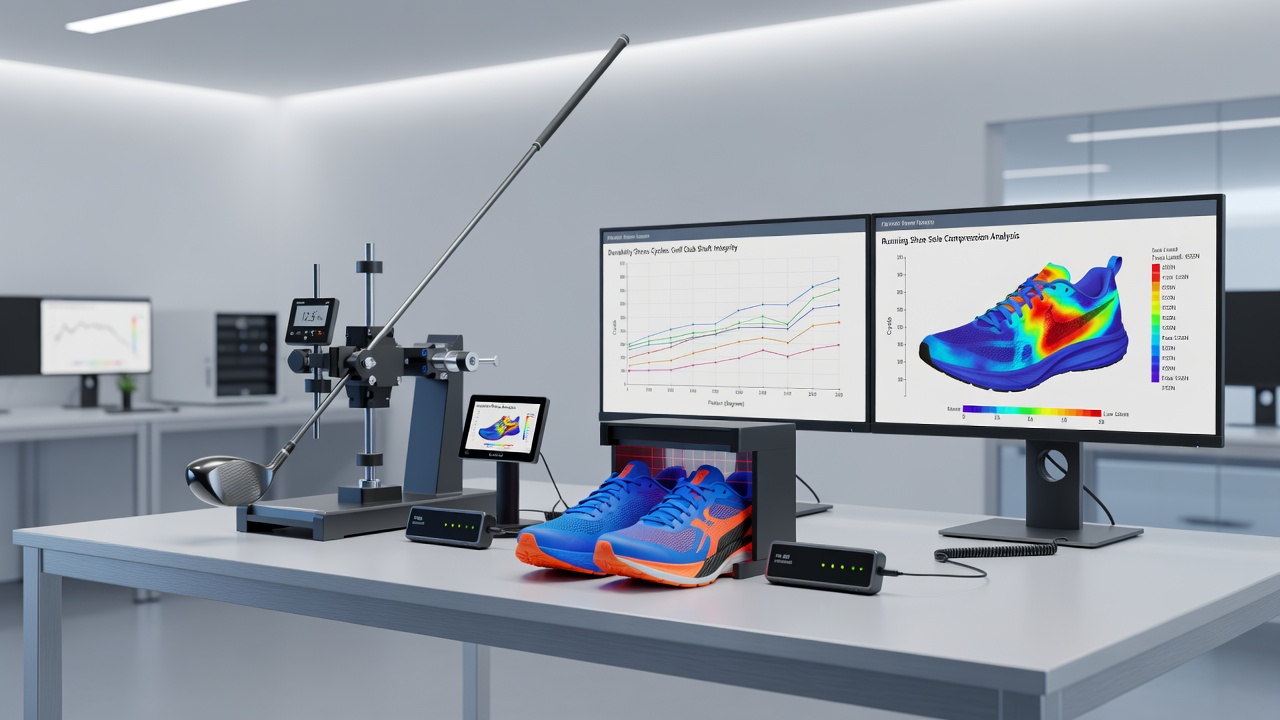
Integrated fitness monitoring systems now connect sensor data from wearables directly to equipment performance metrics, allowing detailed examination of durability factors in golf clubs and running shoes. These setups combine accelerometers, force plates, and strain gauges with athlete tracking platforms to log impact forces, torque loads, and material fatigue over repeated use cycles. Observers note that such integration shifts analysis from post-failure inspections toward predictive modeling based on real-time biometric and mechanical inputs.
Core Durability Elements in Golf Clubs
Golf club durability depends on shaft flex consistency, grip adhesion under repeated torque, and clubhead face integrity after thousands of strikes. Research indicates that swing speed variations and off-center hits accelerate micro-cracks in graphite shafts while causing gradual delamination in composite materials. Data from integrated monitors shows peak torque readings during drives often exceed 50 Newton-meters, correlating with measurable reductions in shaft stiffness after 5,000 to 10,000 swings according to University of Queensland biomechanics reports. Grip compounds lose tackiness as sweat and friction degrade surface polymers, and monitoring systems track hand pressure patterns that predict when replacement becomes necessary.
Durability Patterns in Running Shoes
Running shoe longevity hinges on midsole foam compression resistance, outsole rubber abrasion rates, and upper mesh tear strength across varied surfaces. Integrated fitness platforms record ground reaction forces that reach 2.5 to 3 times body weight per stride, revealing how cumulative loading compresses ethylene-vinyl acetate foams and reduces energy return by 15 to 20 percent after 400 to 600 kilometers. Studies from the Canadian Sport Institute Pacific demonstrate that pronation angles captured through in-shoe sensors align with accelerated wear on medial outsoles, while temperature and moisture data from connected apparel further influence material breakdown rates during extended training blocks.
Integration Mechanisms and Data Flow
Fitness monitoring systems merge club or shoe sensors with wearable devices through Bluetooth or ANT+ protocols, streaming swing analytics and stride metrics to centralized dashboards. These platforms apply algorithms that cross-reference force-time curves with material property databases to forecast failure points. For instance, golf systems flag shaft resonance frequency shifts as early indicators of fatigue, while running setups compare impact loading symmetry across left and right shoes to highlight asymmetric degradation. As of June 2026, several commercial platforms incorporate machine learning models trained on multi-sport datasets exceeding 2 million activity sessions, improving prediction accuracy for both equipment categories.
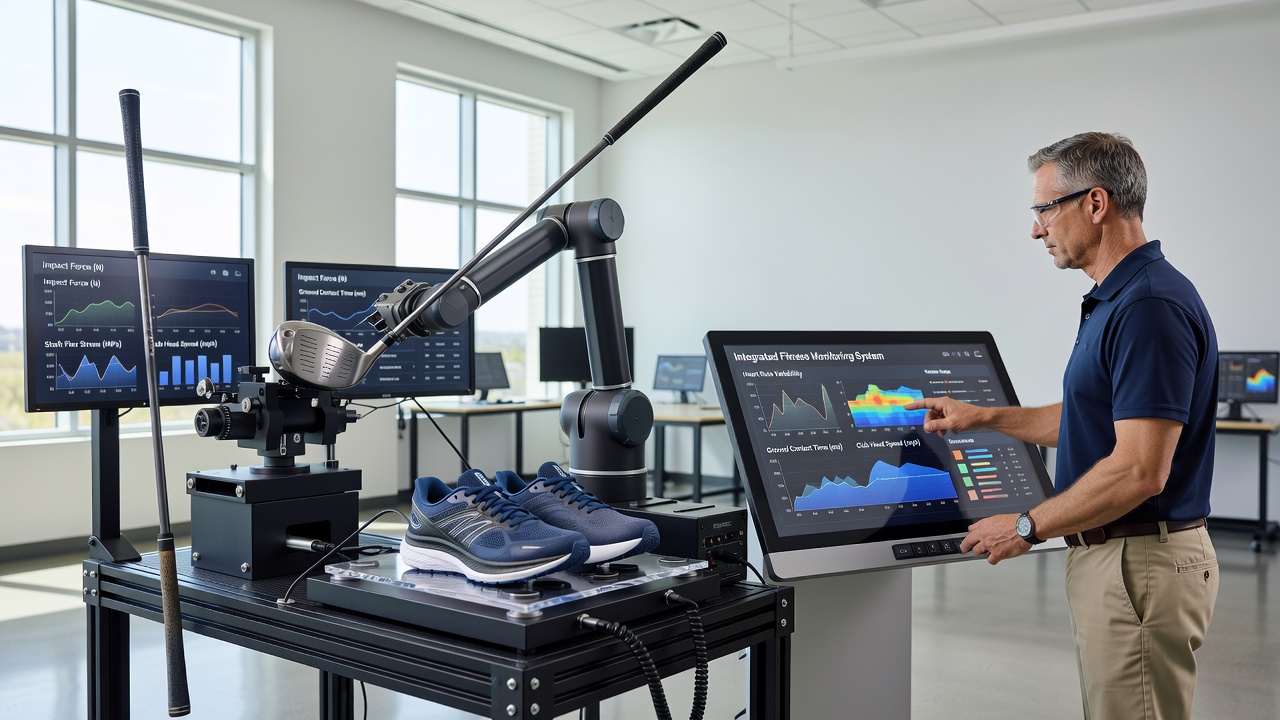
Calibration routines align sensor outputs with laboratory destructive testing results, creating feedback loops that refine durability thresholds. Researchers discovered that combining heart rate variability from fitness trackers with equipment stress readings provides secondary context, since elevated fatigue levels often coincide with altered movement mechanics that increase localized wear.
Cross-Equipment Analysis Approaches
Comparative studies examine how monitoring data from golf swings and running strides reveals shared durability principles, such as repetitive high-impact loading and environmental exposure effects. Observers note that both domains benefit from tracking cumulative work metrics, where total energy transferred through equipment materials serves as a proxy for remaining service life. One study revealed that athletes using unified monitoring platforms adjusted training loads based on projected equipment lifespan, resulting in fewer unexpected failures during competitive periods. Those who've examined multi-sport datasets find that grip and cushioning degradation follow similar exponential curves once initial material modulus thresholds are crossed.
Practical Applications in Training Environments
Coaches and equipment technicians apply these integrated insights to schedule maintenance and replacements before performance drops occur. Monitoring alerts trigger inspections when swing dispersion increases alongside declining shaft stiffness readings, or when running cadence changes coincide with reduced midsole rebound metrics. Trade groups such as the World Federation of the Sporting Goods Industry have compiled guidelines that incorporate sensor-derived durability benchmarks into product testing standards. This approach reduces waste while maintaining consistent equipment behavior across training cycles.
Conclusion
Integrated fitness monitoring systems supply objective datasets that quantify durability factors across golf clubs and running shoes by linking mechanical stress measurements with athlete performance variables. Continued refinement of sensor fusion techniques and predictive algorithms supports more precise equipment management strategies, grounded in empirical loading histories rather than fixed usage intervals.