Elasticity Transfer in Multi-Sport Endurance Gear: Swimwear Fabrics Inform Running Shoe Construction
David Carter · Aug 5, 2026
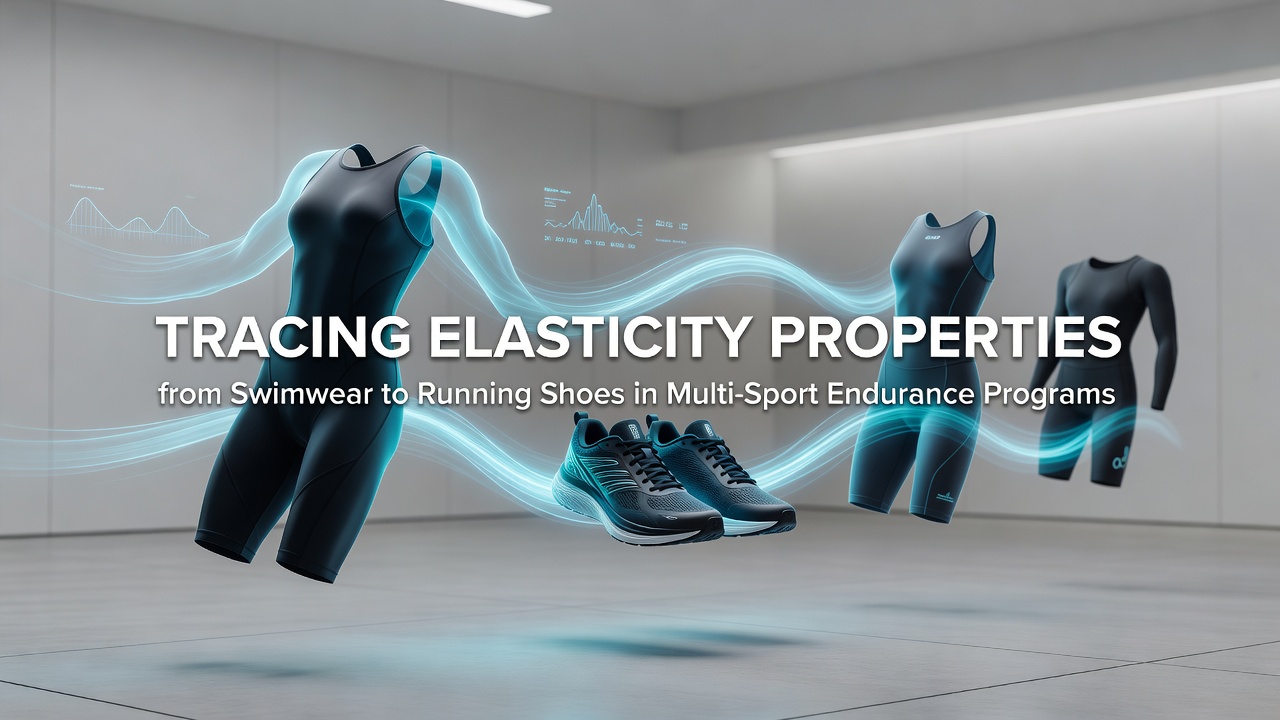
Elasticity Transfer in Multi-Sport Endurance Gear: Swimwear Fabrics Inform Running Shoe Construction
Material scientists track elasticity metrics across swimwear and running shoes because both products must deliver repeated stretch and snap-back under load during long training sessions, and patterns observed in one category often guide refinements in the other. Data from textile laboratories show that swimwear elastane blends achieve 200 to 400 percent elongation before returning to original shape, while midsole foams in endurance running shoes target 50 to 70 percent energy return over thousands of gait cycles.
Core Properties Measured in Swimwear
Manufacturers test swimwear for tensile strength, hysteresis loss, and chlorine resistance because pool sessions in multi-sport programs expose fabrics to repeated extension and chemical degradation. Researchers at the University of Sydney documented that high-quality swimwear maintains at least 85 percent of initial modulus after 200 hours of simulated pool exposure, a benchmark that equipment designers later adapted when evaluating foam recovery in humid training environments.
Engineers measure power loss during stretch-recovery cycles with standardized instruments that record force versus displacement curves, and these same instruments now appear in running shoe labs where teams compare prototype midsoles against swimwear reference samples. The process reveals which polymer formulations minimize energy dissipation, allowing athletes to conserve effort across swim and run segments of the same training day.
Application to Running Shoe Midsoles
Running shoe developers borrow the concept of low-hysteresis polymers from swimwear research to reduce heat buildup inside the shoe during prolonged runs, and several brands now incorporate elastane-inspired additives into EVA and TPU foams. In August 2026 the European Committee for Standardization released updated test protocols that require endurance footwear to report recovery percentages after cyclic loading at 40 degrees Celsius, directly mirroring swimwear durability standards already in use across North American and Australian programs.
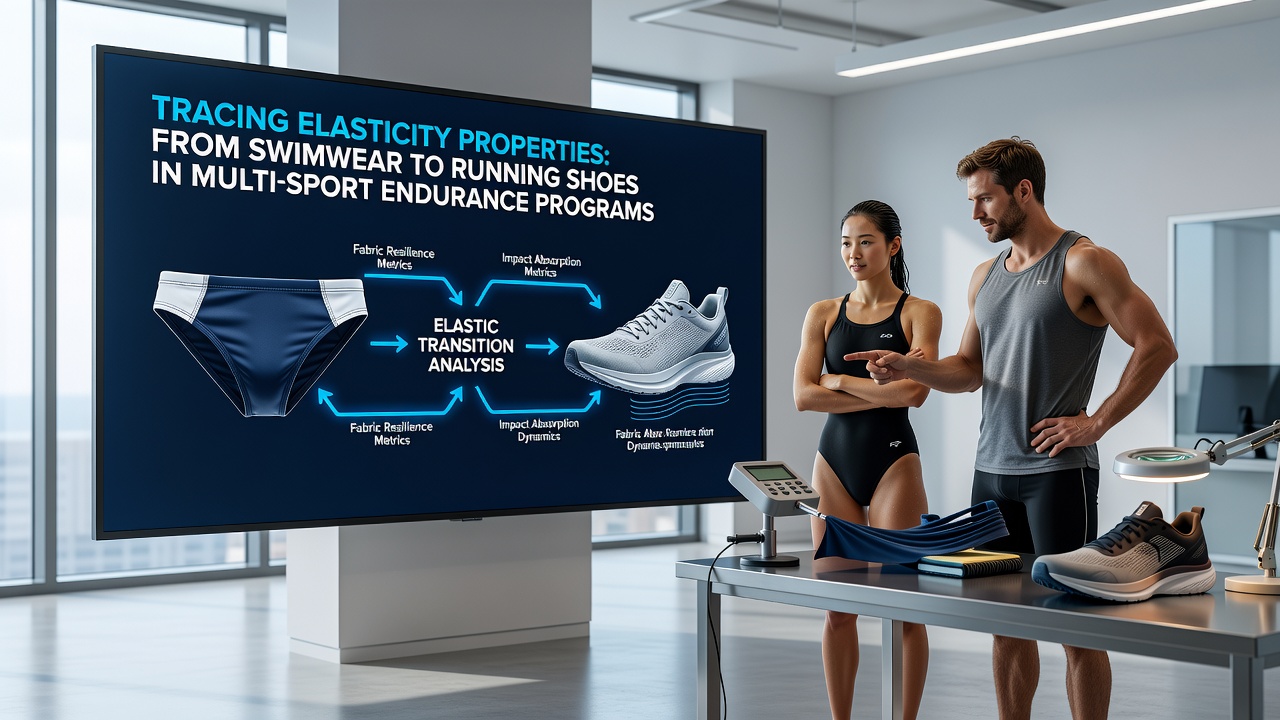
One study conducted at the Australian Institute of Sport compared energy return values of three commercial running shoes against a reference swimwear fabric sample and found that the shoe with the lowest hysteresis loss produced stride efficiency gains comparable to the fabric's stretch recovery in water. Program coordinators use these cross-category measurements to select equipment sets that maintain consistent rebound characteristics when athletes move from pool to road within the same session.
Integration in Multi-Sport Training Schedules
Coaches in triathlon and duathlon programs log equipment performance alongside athlete biometric data, and elasticity readings help predict when swimwear or shoe components begin to degrade. Canadian Sport Institute Pacific researchers reported in 2025 that teams monitoring both fabric and foam modulus reduced unplanned equipment swaps by 22 percent over a 16-week macrocycle because early detection of elasticity loss allowed timely rotation of gear.
Design teams now share polymer databases between swimwear and footwear divisions so that a new elastane variant tested for drag reduction in water can be evaluated for cushioning resilience on land within weeks rather than months. This shared approach shortens development timelines and ensures that athletes receive consistent mechanical feedback whether they are pulling through water or pushing off pavement.
Measurement Techniques and Data Sharing
Standardized tensile testers equipped with environmental chambers allow direct comparison of swimwear strips and shoe foam coupons under identical temperature and humidity conditions, adn several research groups publish anonymized datasets so that smaller brands can align their products with established benchmarks. Observers note that programs adopting these shared protocols report fewer complaints about sudden stiffness changes during brick workouts where athletes change disciplines rapidly.
Industry organizations such as the International Association of Athletics Federations and the Fédération Internationale de Natation maintain working groups that review elasticity test methods annually, and their joint guidelines encourage equipment makers to cite recovery percentages rather than vague marketing terms when describing product performance across sports.
Conclusion
Tracing elasticity properties from swimwear through to running shoes gives multi-sport programs a practical framework for selecting and rotating gear that maintains consistent rebound characteristics. Continued data exchange between textile and footwear laboratories supports equipment choices that align with the demands of combined swim and run training blocks, while updated standards scheduled for release after August 2026 are expected to formalize these cross-category measurement practices.