Elasticity Variations Across Soccer Cleats and Basketball Shoes: Enhancing Agility on Different Playing Surfaces
Xander Ludwig · Aug 12, 2026
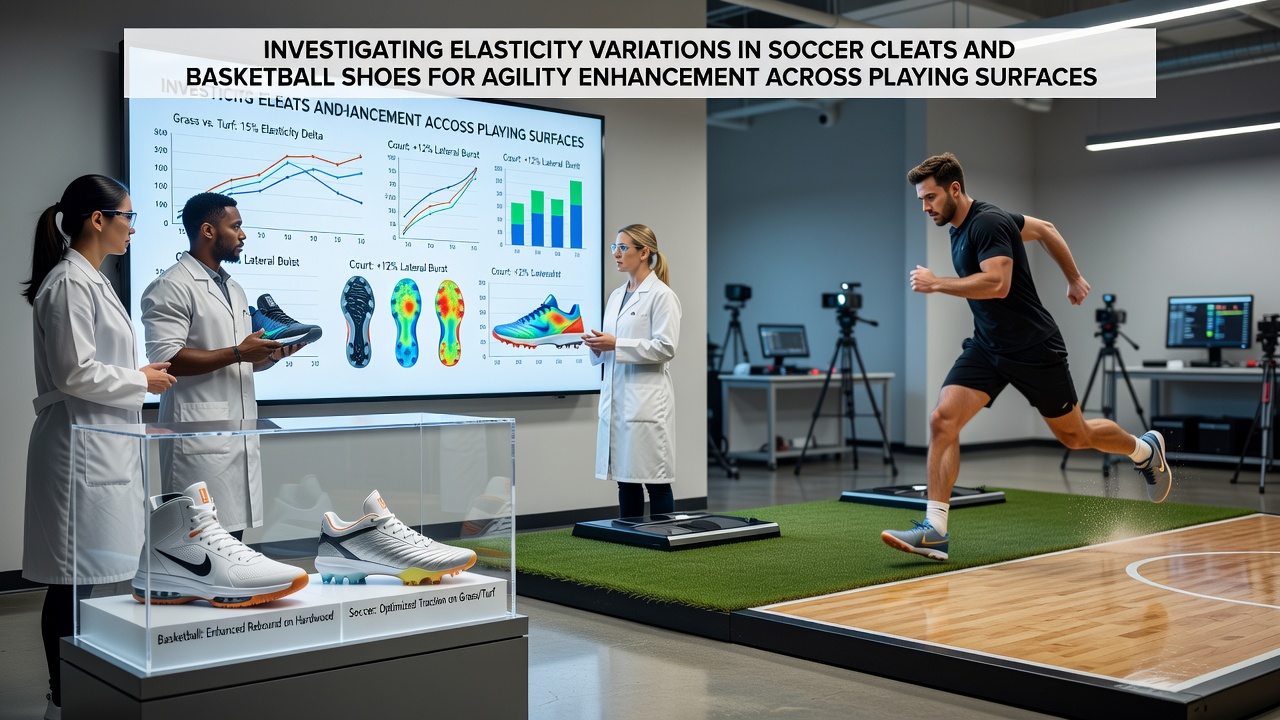
Elasticity Variations Across Soccer Cleats and Basketball Shoes: Enhancing Agility on Different Playing Surfaces
Elasticity in athletic footwear refers to the material's ability to deform under load and return to its original shape, which directly affects energy return during quick directional changes, and researchers continue to examine how these properties differ between soccer cleats and basketball shoes when athletes move across grass, turf, hardwood, and concrete. In August 2026 the European College of Sport Science released updated test protocols that standardize compression and rebound measurements for multi-surface applications, allowing direct comparisons between cleat studs and court shoe outsoles without relying on brand-specific marketing claims.
Material Composition and Elastic Response
Soccer cleats typically incorporate thermoplastic polyurethane plates paired with rubber compounds that exhibit higher stiffness to penetrate natural grass, while basketball shoes rely on ethylene vinyl acetate midsoles blended with thermoplastic elastomers for controlled deformation on indoor courts, and data from laboratory durometer readings show that cleat rubber often registers 10 to 15 points higher on the Shore A scale than the corresponding basketball shoe formulations. These differences produce distinct rebound coefficients, with cleats delivering quicker snap-back on firm turf yet reduced compliance on polished hardwood where excessive rigidity can increase shear forces at the foot-shoe interface.
Surface Interaction Patterns
Grass and artificial turf demand stud penetration combined with lateral elasticity to maintain traction during cutting maneuvers, whereas hardwood and concrete require higher friction coefficients without excessive torsional resistance, and field tests conducted by the Australian Institute of Sport demonstrate that cleat designs optimized for natural grass lose up to 18 percent of measured energy return when transferred to indoor courts. Conversely, basketball shoes tested on the same surfaces show improved vertical leap metrics indoors but reduced forward propulsion on longer grass because their flatter outsoles fail to engage the ground as effectively as studded models.
Measurement Techniques and Recent Findings
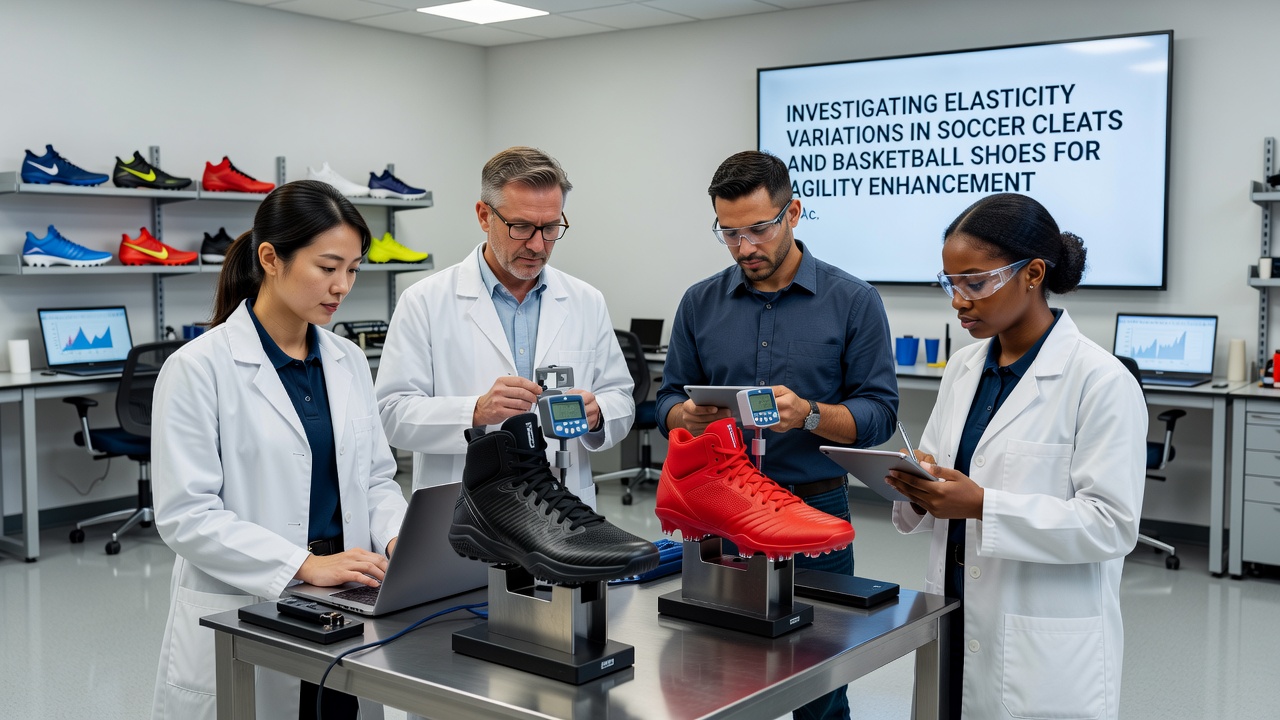
Researchers employ drop-weight impact testers and force-plate arrays to quantify peak vertical and horizontal ground reaction forces while athletes execute 45-degree cuts and 180-degree pivots, and protocols established in 2026 now include cyclic loading sequences that simulate repeated sprints rather than single-step events. One study coordinated across Canadian and German laboratories found that increasing midsole elasticity by 12 percent in basketball shoes improved change-of-direction times on hardwood by 0.08 seconds on average, yet the same modification produced no measurable gain on natural grass when paired with traditional cleat plates. Observers note that temperature also influences results, since rubber compounds stiffen below 10 degrees Celsius and soften above 30 degrees, altering the elastic modulus during outdoor matches that begin in cooler morning conditions and extend into warmer afternoon periods.
Agility Implications Across Sports
Agility enhancement depends on matching elastic properties to both the surface modulus and the sport-specific movement patterns, so soccer players executing repeated accelerations on turf benefit from cleats whose studs compress minimally while the upper plate flexes laterally, and basketball athletes rely on shoe midsoles that absorb initial impact before returning stored energy during jump stops. Cross-training programs that alternate between the two surfaces require athletes to swap footwear rather than adapt a single model, because mismatched elasticity increases the metabolic cost of each directional change according to oxygen uptake measurements recorded during controlled trials. Those who've examined professional team inventories report that clubs now maintain separate rotation schedules for cleats and court shoes to preserve the elastic integrity of each pair through the season.
Conclusion
Continued refinement of elasticity testing standards provides clearer guidance for equipment selection across playing surfaces, and the August 2026 protocols from the European College of Sport Science together with parallel work at the Australian Institute of Sport supply objective benchmarks that manufacturers and athletes can apply when evaluating new models. The data indicate that surface-specific design remains essential, since no single elastic profile optimizes performance for both soccer cleats on grass and basketball shoes on hardwood.