Foam and Dampener Longevity: Insights for Athletes Managing Track and Court Training Regimens
Frankie Keller · Aug 22, 2026
Foam and Dampener Longevity: Insights for Athletes Managing Track and Court Training Regimens
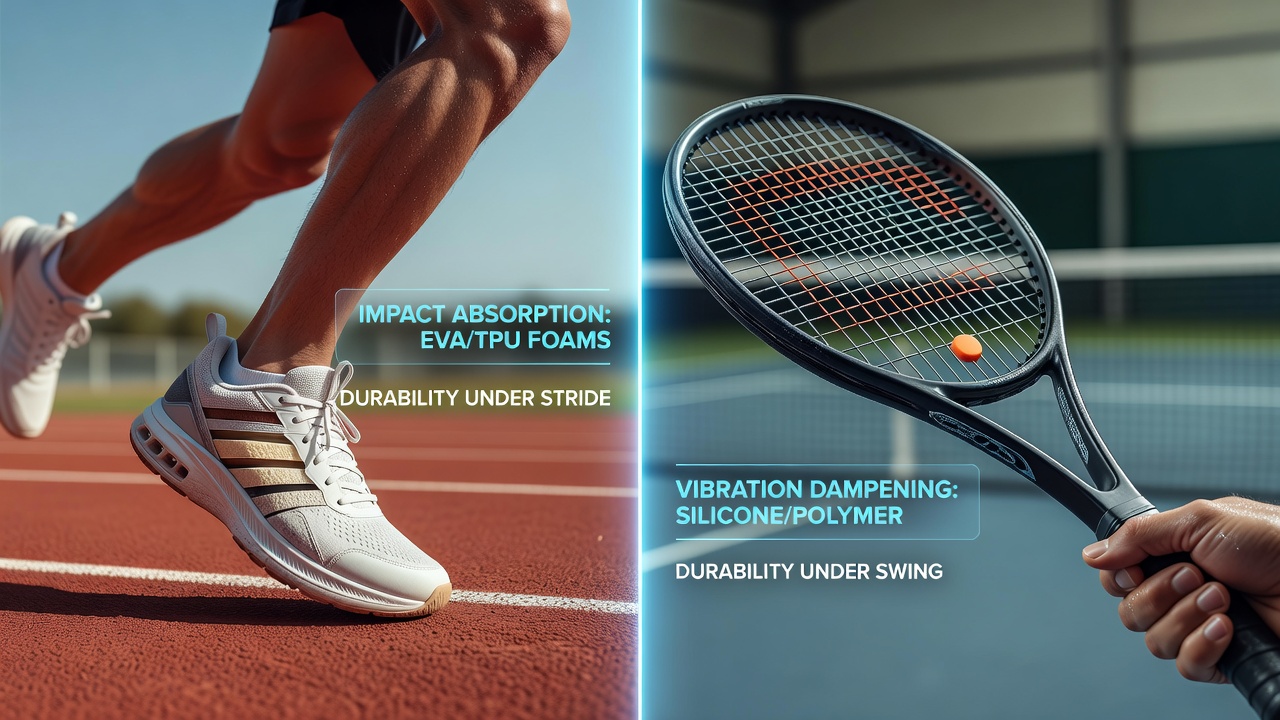
Athletes who split time between track sessions and tennis courts encounter distinct equipment demands that affect how cushioning materials perform over extended periods, and material scientists have documented consistent patterns in how these components degrade. Running shoe foams typically consist of ethylene-vinyl acetate or polyurethane compounds that compress under repeated heel strikes, while tennis racket dampeners made from silicone or rubber absorb string vibration to maintain feel during rallies. Both systems face cyclic loading that leads to gradual loss of elasticity, and researchers tracking multi-sport schedules note that athletes who train on hard courts several days a week while logging track mileage experience accelerated changes in these parts.
Material Composition and Initial Performance Characteristics
Running shoe midsoles rely on closed-cell foam structures that provide energy return through controlled deformation, yet exposure to moisture from sweat and temperature fluctuations during August training blocks causes the cells to break down faster than in controlled lab conditions. Data from equipment testing labs indicate that after roughly 300 to 500 kilometers of mixed surface running, compression set reaches levels where cushioning drops by 20 to 30 percent. Tennis dampeners start as small cylindrical inserts placed between main and cross strings, and their initial effectiveness comes from internal friction that dissipates high-frequency vibrations, but repeated impacts from serves and groundstrokes cause micro-cracks to form within the polymer matrix.
Studies conducted at the University of Queensland's sports engineering facility have measured how both foam and dampener hardness shifts after equivalent cycles of use, revealing that environmental factors such as court surface heat and ambient humidity accelerate the same molecular changes in each material. Athletes balancing five track workouts with three court sessions per week therefore see parallel timelines for when replacement becomes necessary, since neither component regains its original properties once permanent deformation sets in.
Degradation Patterns Under Combined Training Loads
Observers tracking equipment across seasons find that foam in running shoes begins to exhibit permanent flattening in the forefoot and heel zones first, while dampeners lose their ability to mute string buzz after approximately 40 to 60 hours of active play. The common thread lies in viscoelastic behavior: both materials store and release energy less efficiently once polymer chains realign under sustained stress. When athletes move directly from a morning track interval session onto afternoon tennis drills, residual heat and perspiration transfer between shoes and rackets, creating conditions that hasten oxidation in the foam and surface cracking in the dampener rubber.
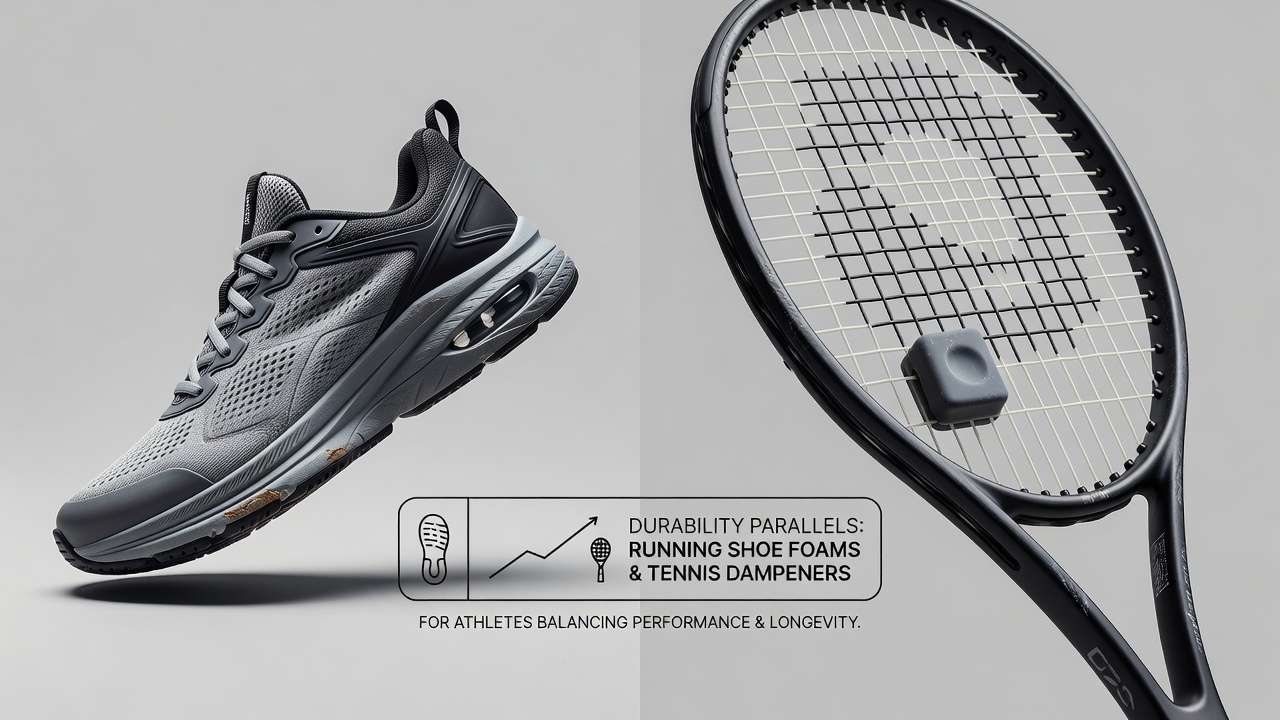
Research published through the European College of Sport Science demonstrates that combined loading cycles produce measurable stiffness increases in both categories, with running shoe foams hardening at rates comparable to dampener embrittlement when total impact events exceed 10,000 per week. Those who schedule recovery days between court and track activities report slower progression of these changes, yet the underlying material fatigue follows identical curves regardless of rest intervals. Equipment manufacturers have responded by introducing hybrid formulations that incorporate recycled polymers, yet field data collected through 2026 continues to show the same durability thresholds for athletes maintaining heavy dual schedules.
Replacement Timing and Performance Monitoring
Coaches and equipment managers recommend monitoring visible indicators such as midsole creasing or dampener discoloration rather than relying solely on mileage or hour counts, because individual gait patterns and swing styles introduce variability. In August 2026, several professional development programs introduced sensor-embedded insoles paired with racket vibration loggers to capture real-time data on energy return decline, allowing athletes to replace components before performance drops become noticeable during competition. The approach mirrors practices already used in other multi-surface sports where cumulative stress determines service life.
Figures from the Australian Institute of Sport reveal that athletes who rotate between two pairs of running shoes while using fresh dampeners every four weeks maintain more consistent ground reaction forces and racket control metrics across a full training block. These practices reduce the risk of compensatory movement patterns that arise when degraded foam or ineffective vibration control alters proprioceptive feedback.
Conclusion
Material parallels between running shoe foams and tennis racket dampeners center on shared responses to repeated mechanical stress, moisture exposure, and temperature variation that athletes encounter when managing simultaneous track and court commitments. Objective measurements from independent labs confirm predictable timelines for performance loss in both categories, and structured rotation combined with environmental awareness helps maintain equipment function across extended seasons. Continued monitoring through emerging sensor technologies promises more precise replacement guidance for those who train across multiple surfaces.