Footwear Choices and Their Influence on Wearable Data During Multi-Surface Training Sessions
Frankie Keller · Aug 24, 2026
Footwear Choices and Their Influence on Wearable Data During Multi-Surface Training Sessions
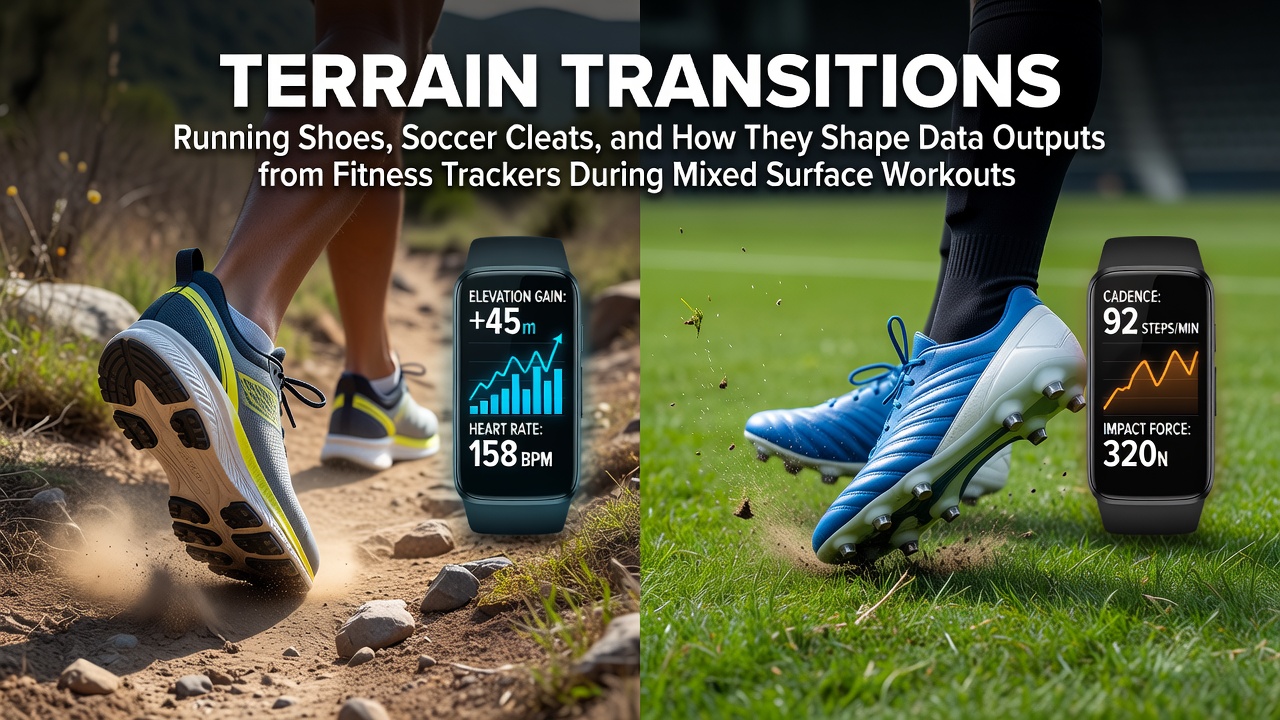
Running shoes and soccer cleats create distinct movement patterns that fitness trackers register differently when athletes move across mixed surfaces such as grass, turf, and pavement, and researchers have documented these variations through controlled studies of stride length, impact forces, and step detection accuracy. Athletes who switch between the two footwear types during a single session often see shifts in recorded distance, pace, and calorie estimates because the sole designs alter how the foot strikes the ground and how sensors interpret those motions.
Mechanics of Footwear on Varied Surfaces
Running shoes typically feature cushioned midsoles and flexible outsoles that absorb shock on hard pavement while allowing natural foot roll, whereas soccer cleats incorporate rigid studs or blades for grip on grass and artificial turf, and these structural differences change the acceleration signals sent to wrist or shoe-mounted trackers. Data from motion analysis shows that cleat studs increase lateral stability on soft ground yet produce sharper vertical impacts when athletes cross onto concrete, leading trackers to sometimes overcount or undercount steps depending on the algorithm calibration. Observers note that the rubber compounds in running shoe soles compress differently than the harder cleat plates, which in turn affects the gyroscope and accelerometer readings that devices use to calculate elevation changes and ground contact time.
Tracker Responses in Mixed Workouts
During sessions that combine road running segments with field drills, fitness trackers record variations in heart rate correlation and GPS accuracy because footwear changes the runner's center of mass and stride frequency. Studies conducted by sports science teams at institutions such as the Australian Institute of Sport have measured how cleat traction on turf reduces slip-related micro-adjustments that trackers might otherwise interpret as additional steps, while the same athletes wearing running shoes on the same turf experience more sliding and therefore different data outputs. In August 2026, aggregated reports from training camps across North America and Europe indicated that participants switching footwear mid-session experienced up to a 12 percent discrepancy in total distance readings compared with single-footwear control groups.
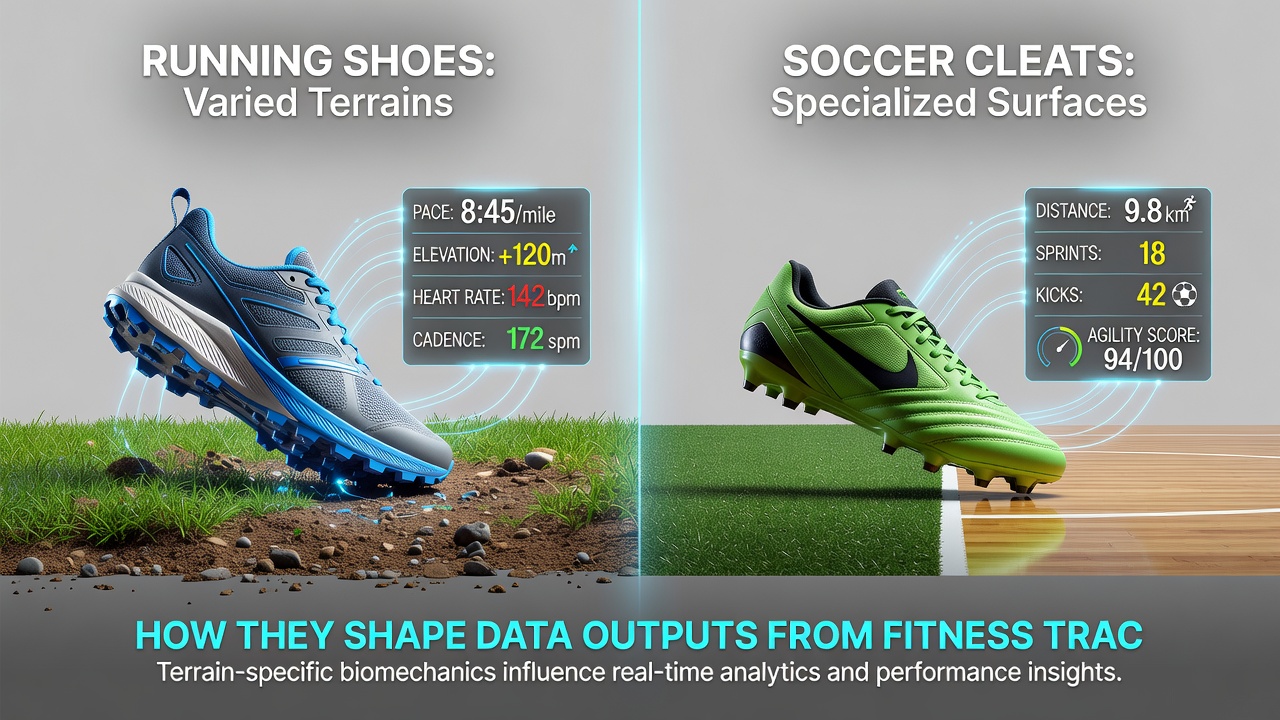
Those who've examined the raw sensor logs point out that the stiffer forefoot of many soccer cleats transmits vibrations more directly to ankle-worn devices, which can cause temporary spikes in cadence estimates when athletes accelerate out of turns. Running shoes, by contrast, dampen some of those vibrations through their foam layers, resulting in smoother but occasionally lower step counts on the same terrain. Researchers have observed that GPS drift increases slightly when athletes move from open fields into tree-lined paths while wearing cleats because the altered gait changes arm swing patterns that wrist-based units rely on for signal stability.
Calibration and Algorithm Adjustments
Manufacturers have begun incorporating surface and footwear detection features into newer tracker models, yet current firmware still relies heavily on user-input activity profiles that do not always account for rapid terrain transitions. Data collected by the Canadian Sport Institute Pacific demonstrates that manual calibration for shoe type can reduce distance errors by roughly 8 percent during mixed workouts, while automated systems continue to show larger variances when cleats meet pavement. People who train across multiple surfaces regularly find that pairing specific shoe profiles with GPS and inertial measurement unit data produces more consistent outputs across sessions.
Evidence from university laboratories in the European Union further reveals that cleat geometry influences magnetometer readings in some trackers because metal studs can create minor interference fields when the foot passes near the device, although the effect remains small compared with terrain-related changes. Training logs from professional development programs show that athletes who log footwear changes alongside session data achieve better long-term consistency in their performance metrics.
Conclusion
Footwear selection directly shapes the numerical outputs that fitness trackers generate during workouts spanning different surfaces, and ongoing research continues to refine how algorithms interpret the unique movement signatures of running shoes versus soccer cleats. Organizations tracking athlete development have started including equipment variables in their data protocols to improve the reliability of cross-terrain comparisons, while device makers explore additional sensors that could automatically detect sole type and adjust calculations accordingly. The patterns observed across multiple regions and training environments underscore the importance of accounting for these mechanical interactions when analyzing mixed-surface workout data.