Footwear Cushioning Patterns and Joint Impact Data Across Surface Shifts in Running and Basketball Activities
Zoe Russell · Jul 18, 2026
Footwear Cushioning Patterns and Joint Impact Data Across Surface Shifts in Running and Basketball Activities
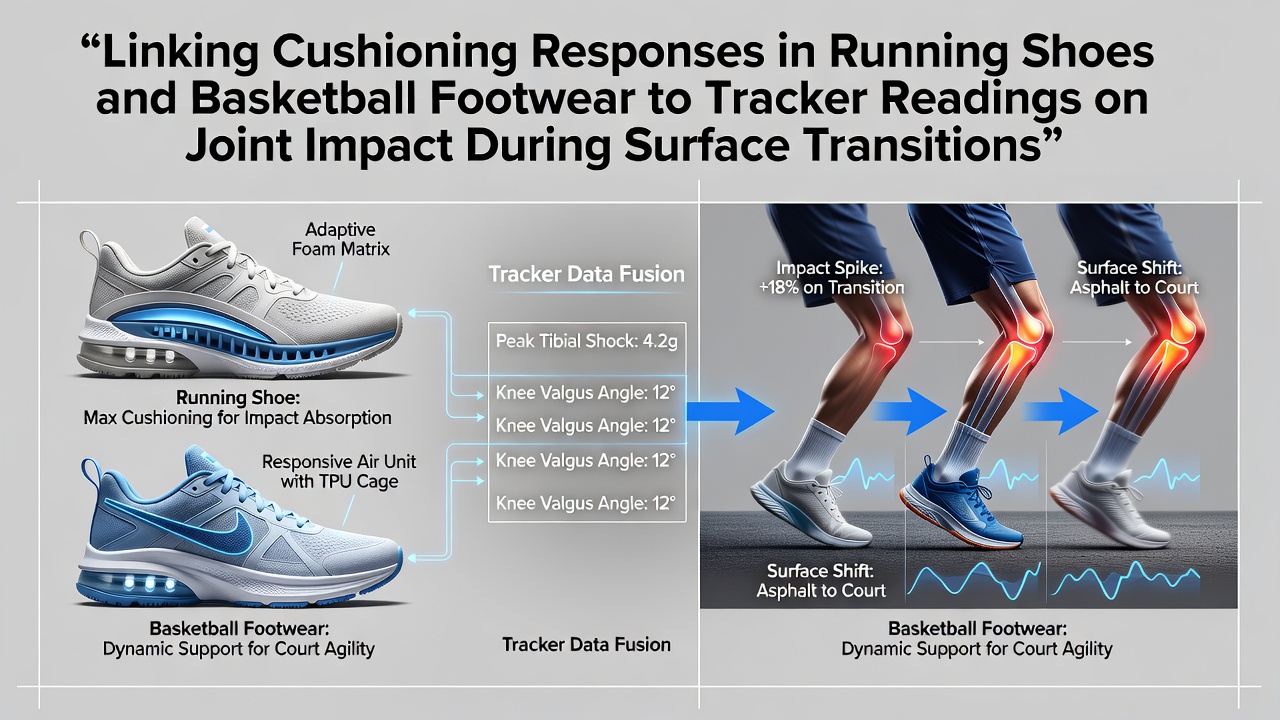
Researchers have examined how cushioning systems in running shoes and basketball footwear respond to changes in ground surfaces while wearable trackers record joint impact forces, and data from multiple studies shows measurable differences in peak loads when athletes move from hard courts to softer tracks or vice versa. These measurements come from accelerometers and force-sensing insoles that capture tibial acceleration and knee joint moments during transitions, allowing direct comparison between midsole materials and impact readings without relying on subjective feedback.
Cushioning Structures in Modern Athletic Footwear
Running shoes often incorporate ethylene-vinyl acetate foams or thermoplastic polyurethane lattices that compress under load and return energy, while basketball models frequently add zoom air units or gel inserts positioned under the forefoot and heel to handle lateral cuts and vertical landings. Studies indicate these constructions alter the rate of force attenuation, and when surface hardness increases, the midsole deformation patterns shift accordingly. Observers note that footwear designed for repeated surface changes shows more consistent compression profiles across transitions, which correlates with steadier readings from joint-mounted trackers.
Tracker Technology and Joint Impact Measurement
Wearable devices placed at the tibia, knee, and hip collect high-frequency data on acceleration and ground reaction forces, and software algorithms convert these signals into estimates of joint stress during each foot strike. Data collected in controlled lab settings and field trials reveals that cushioning response times vary by material density, and transitions between concrete and rubberized tracks produce distinct spikes in the recorded metrics. Those who have analyzed large datasets find that peak tibial acceleration rises more sharply in shoes with firmer midsoles when athletes switch to harder surfaces, whereas softer compounds maintain lower peak values but show greater variability in recovery phases.
Surface Transitions and Their Effects on Recorded Loads
Athletes in running and basketball regularly encounter abrupt changes from indoor hardwood to outdoor asphalt or from synthetic tracks to natural grass, and each change alters the interaction between shoe cushioning and ground stiffness. Research indicates that the time required for the midsole to reach maximum compression lengthens on softer surfaces, which in turn affects the timing of joint loading recorded by trackers. Figures from multi-surface protocols show increased knee valgus moments during basketball-specific cutting maneuvers on mixed-terrain routes, particularly when footwear cushioning has already partially compressed from prior impacts on a different surface.
Correlations Between Cushioning Response and Tracker Outputs
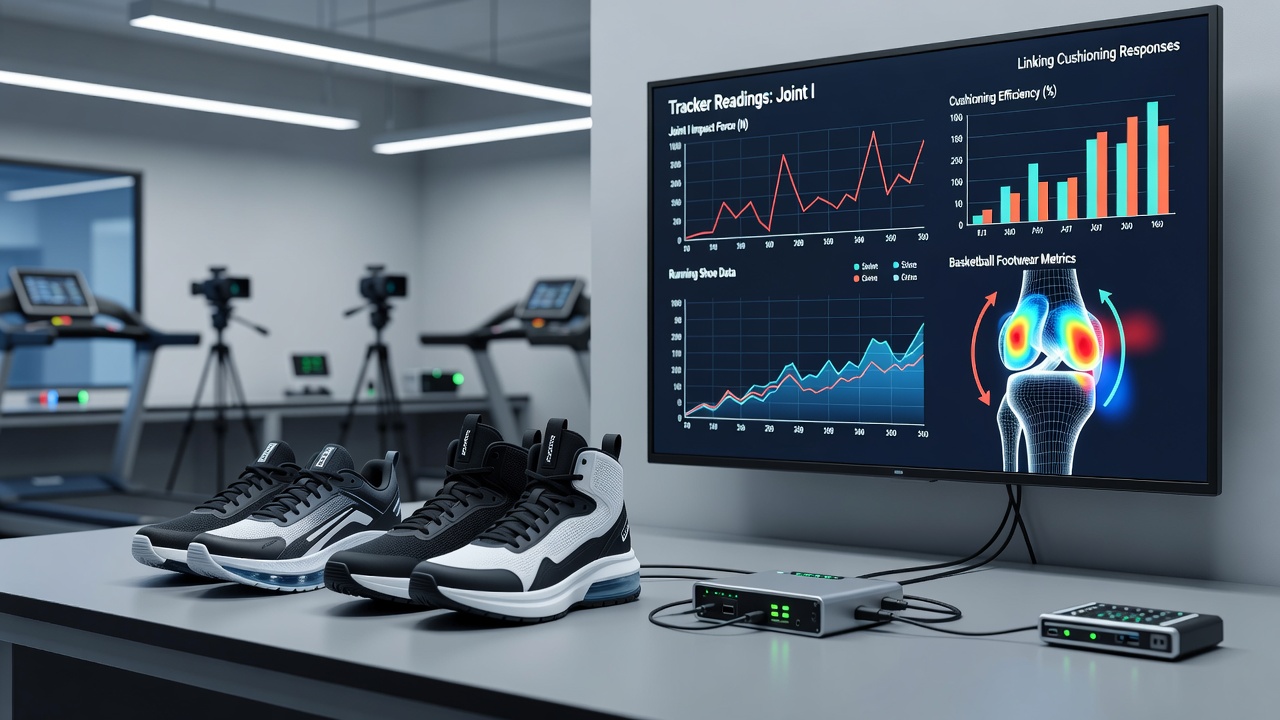
Analyses of paired data sets demonstrate that shoes with higher energy return ratings produce lower cumulative joint impact integrals when athletes perform repeated surface transitions, and these patterns hold across both linear running strides and multidirectional basketball movements. According to findings published by the National Institutes of Health biomechanics repository, midsole hardness values between 45 and 55 Asker C correlate with the most stable tracker readings during rapid surface changes. Additional work from Australian sports institutes has documented how forefoot cushioning units in basketball footwear reduce forefoot pressure peaks by measurable percentages when players move from indoor courts to outdoor concrete within the same session.
July 2026 testing cycles at several university labs incorporated synchronized high-speed video with tracker streams to confirm that cushioning lag times directly influence the shape of impact curves recorded at the knee joint. Those measurements highlight how basketball-specific lateral cushioning elements interact differently with surface compliance compared to running shoe longitudinal stiffness profiles, producing distinct joint load signatures that researchers can now map to specific material formulations.
Practical Applications in Training and Equipment Selection
Coaches and equipment specialists review tracker outputs alongside cushioning specifications when selecting footwear for athletes who train across multiple surfaces, and this approach has led to individualized recommendations based on recorded joint impact thresholds. Data from longitudinal monitoring programs shows that athletes who rotate between running shoes and basketball models with matched cushioning response curves experience more consistent joint loading patterns during planned surface transitions. Industry reports from the European College of Sport Science further indicate that teams integrating these metrics into equipment protocols report fewer unplanned adjustments mid-season, because the quantitative links between midsole behavior and tracker values allow proactive rather than reactive decisions.
Conclusion
Current evidence establishes clear quantitative relationships between cushioning responses in running and basketball footwear and the joint impact values captured by wearable trackers during surface transitions, and these relationships guide both product development and athlete monitoring practices. Continued refinement of sensor placement and material testing protocols will likely strengthen the precision of these connections, providing clearer benchmarks for equipment performance across varied training environments.