Force Management Synergies: Equipment Design Across Golf Swings, Court Pivots, and Bowling Strokes
Zoe Russell · Jun 22, 2026
Force Management Synergies: Equipment Design Across Golf Swings, Court Pivots, and Bowling Strokes
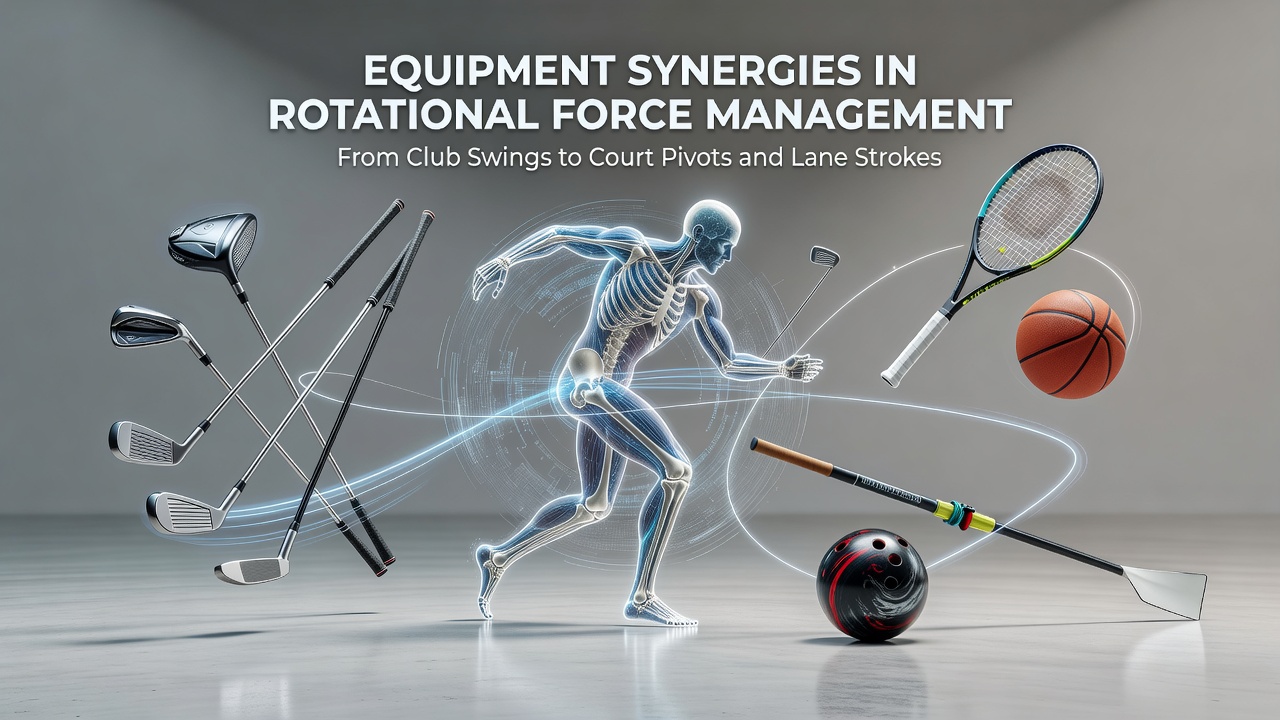
Rotational force management relies on equipment that aligns with biomechanics across multiple sports, and data from training facilities show consistent patterns in how gear influences torque and stability during swings, pivots, and strokes. Researchers at various institutions have documented how club shafts, racket frames, and ball cores interact with athlete-generated rotation, while equipment manufacturers adjust materials to match these demands.
Club Swings and Shaft Flex in Rotational Sequences
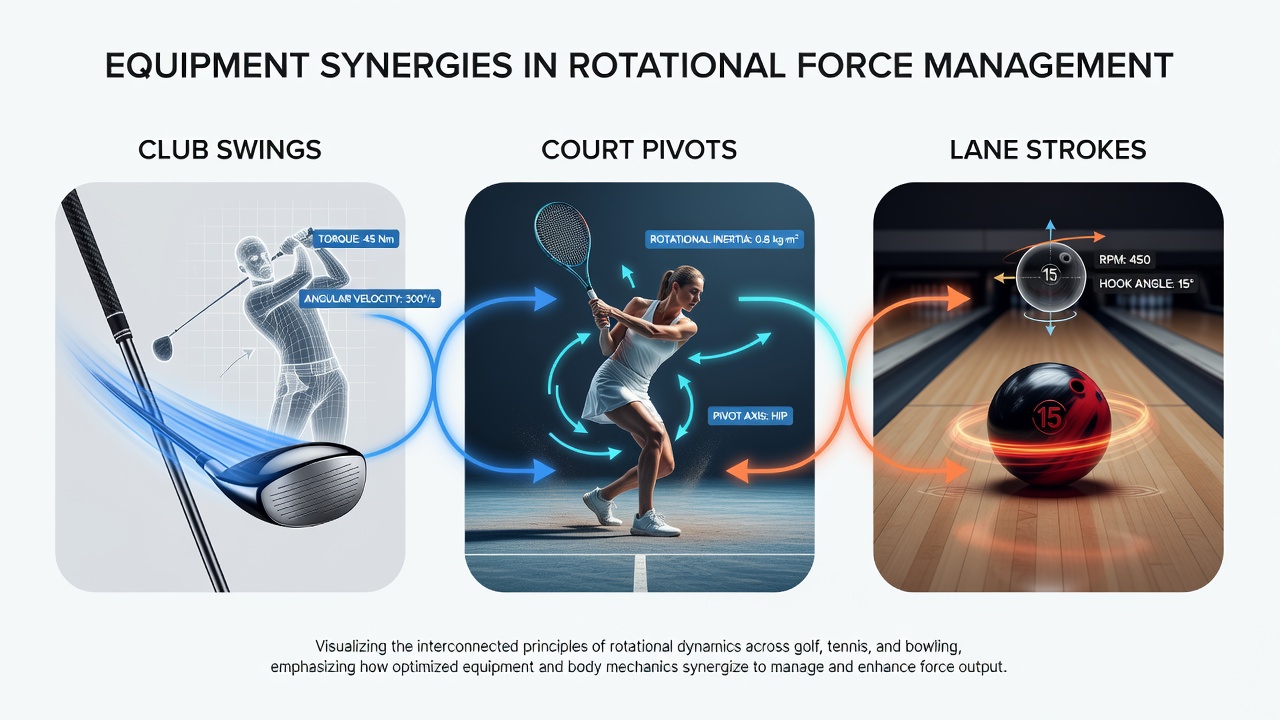
Golf swings generate high rotational torque at the hips and shoulders, and club manufacturers calibrate shaft flex to channel that energy efficiently into the clubhead. Studies from the Australian Institute of Sport indicate that stiffer shafts reduce energy loss during the downswing phase, which allows players to maintain consistent clubface angles at impact. Composite materials in modern shafts absorb vibrational feedback, and this property supports repeated rotational cycles without accelerating fatigue in the forearms and wrists.
Equipment adjustments extend beyond shafts to include grip textures that enhance hand positioning, and these modifications help athletes sustain rotational momentum through the full arc. Data collected during June 2026 equipment testing sessions revealed measurable improvements in swing speed when grip diameters matched individual hand spans, particularly among players who rotate through multiple practice rounds daily.
Court Pivots and Footwear Stability Features
Court sports such as tennis and basketball require rapid rotational pivots that transfer force from the lower body through the torso, and footwear designers incorporate specific sole patterns to manage lateral torque. Outsole compounds with varied durometer ratings grip synthetic surfaces while permitting controlled rotation at the forefoot, which reduces stress on knee ligaments during quick directional changes. Research published by the Canadian Sport Institute demonstrates that midsole cushioning tuned for rotational loads maintains energy return rates above 65 percent across repeated pivot sequences.
Upper construction materials further support these movements by limiting excessive ankle roll, and integrated support structures channel rotational forces upward into the core. Athletes who train with footwear matched to their pivot style record lower instances of overuse injuries in longitudinal tracking programs, according to figures released by sports medicine clinics in multiple regions.
Lane Strokes and Ball Core Dynamics
Bowling strokes depend on controlled wrist rotation to impart spin on the ball, and core designs inside the ball determine how that rotation translates into lane reaction. Manufacturers embed asymmetric weight blocks that shift the center of gravity, which creates predictable hook patterns when the ball encounters friction on the lane surface. Data from the International Bowling Federation shows that core placements optimized for specific rotational speeds improve pin carry consistency by measurable margins in competitive settings.
Ball coverstocks complement these internal structures by managing surface friction, and their chemical compositions allow athletes to adjust rotation rates based on lane conditions. Equipment that synchronizes ball reaction with bowler-generated torque supports sustained performance across extended sessions, and tracking studies confirm reduced variability in delivery angles when coverstock and core pairings align with individual release mechanics.
Cross-Sport Equipment Interactions
Observers note that principles of rotational force management transfer across disciplines when equipment shares common design objectives, such as energy transfer efficiency and joint alignment support. For instance, shaft flex ratings in golf clubs parallel the torsional resistance found in racket handles, while bowling ball cores share weight distribution concepts with weighted inserts used in some training aids for court sports. Research from the University of Calgary's Human Performance Lab has examined these parallels through motion capture analysis, revealing overlapping torque curves during peak rotation phases.
Facilities that integrate multi-sport training programs report athletes adapting equipment adjustments more rapidly when rotational metrics from one activity inform modifications in another. Sensor data collected during combined sessions highlight how grip pressure patterns established in golf swings influence racket handling on court surfaces, and similar correlations appear between bowling release mechanics and pivot stability in basketball footwear.
Measurement Tools and Performance Tracking
Modern tracking systems quantify rotational forces through wearable devices and embedded sensors, and these tools provide objective baselines for equipment selection. Professional organizations such as the Professional Golfers' Association and equivalent bodies in other sports publish guidelines that reference average torque values measured during competition, which help athletes compare equipment performance against standardized benchmarks. Integration of these systems continues to expand, with June 2026 marking increased adoption of portable units that capture real-time data during practice rotations.
Equipment manufacturers incorporate feedback from these measurements into iterative designs, and this process results in components that better match the rotational demands of specific movement patterns. Those who analyze aggregated datasets across sports identify consistent relationships between equipment stiffness profiles and force dissipation rates, which supports targeted refinements without reliance on subjective preference alone.
Conclusion
Equipment synergies in rotational force management emerge from deliberate alignment between material properties and biomechanical requirements across golf, court sports, and bowling. Continued data collection from diverse training environments refines these connections, while sensor technologies provide the measurements necessary to validate design choices. Athletes and technicians who apply these findings achieve more consistent force application through equipment that responds predictably to rotational inputs.