Friction and Load Pathways Across Multi-Sport Gear Transitions
Frankie Keller · Aug 1, 2026
Friction and Load Pathways Across Multi-Sport Gear Transitions
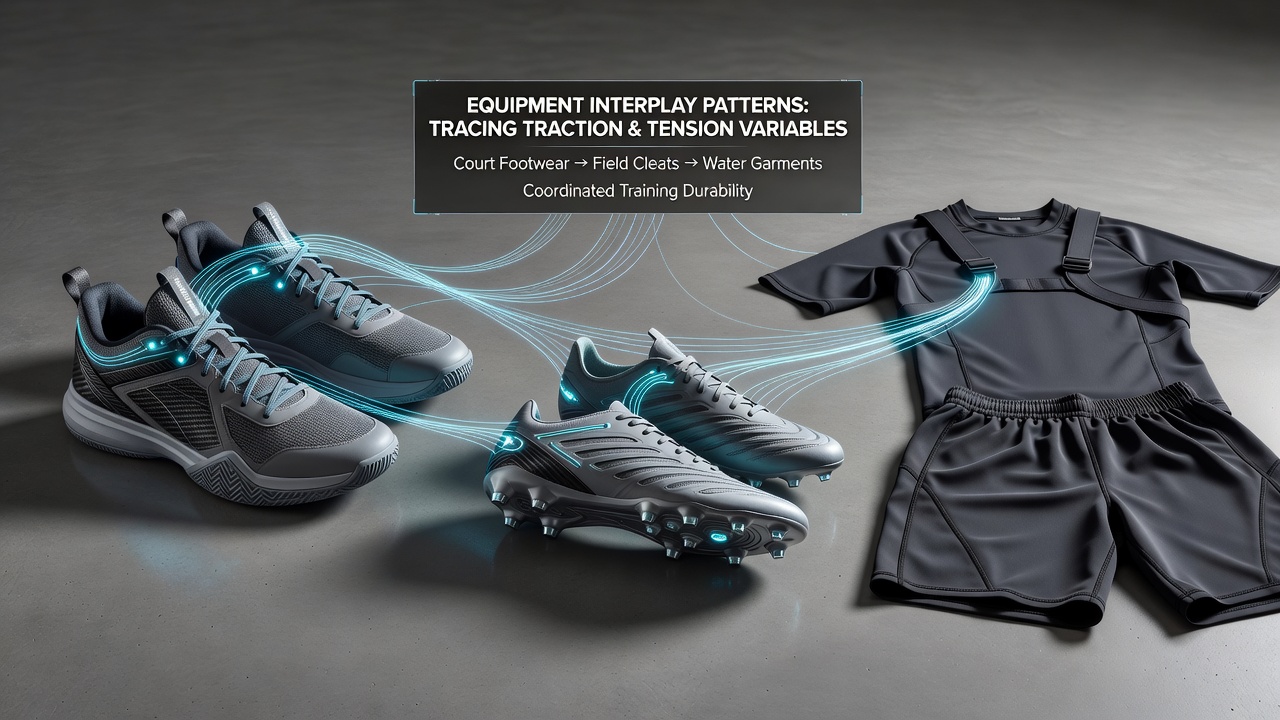
Equipment transitions in multi-sport programs require careful mapping of how sole compounds and fabric tensions respond to repeated surface changes, and researchers track these variables to extend overall gear lifespan. Court footwear incorporates rubber blends formulated for hardwood or synthetic indoor floors, where friction coefficients must balance grip against rapid lateral movements while limiting excessive wear on both shoe and playing surface. Data collected from sports science laboratories indicates that these compounds lose traction effectiveness after approximately 40 to 60 hours of high-intensity use, prompting athletes to monitor sole degradation patterns before shifting to outdoor sessions.
Court Surface Demands and Initial Tension Points
Indoor court shoes distribute pressure across wider contact areas than outdoor models, and this design reduces peak stress on the midsole during pivots and stops. Studies from the Australian Institute of Sport document how ethylene-vinyl acetate foams compress under repeated loading, creating measurable tension zones along the medial forefoot that can propagate into the upper if not addressed through rotation with other footwear types. Observers note that athletes who alternate court sessions with field work experience slower overall material fatigue because the varied loading patterns allow recovery time for compressed cushioning layers.
Field Cleat Integration and Surface Adaptation
Field cleats introduce stud configurations engineered for natural or artificial turf, and these elements alter force distribution compared with flat court soles. Traction research shows that conical or blade studs penetrate turf to depths between 8 and 12 millimeters depending on soil moisture, generating different shear forces that transfer upward through the boot chassis. When athletes move directly from court play to field training, the sudden change in ground reaction forces places new tension on ankle stabilizers and midfoot plates, yet coordinated programs that schedule surface rotations demonstrate improved durability metrics across both footwear categories. A report from the Canadian Sport Institute Pacific highlights that scheduled alternation between indoor and outdoor footwear can extend average cleat lifespan by 15 to 20 percent when tension variables are tracked through pressure-mapping insoles.
Aquatic Garments and Drag Reduction Variables
Water garments complete the equipment chain by introducing hydrodynamic tension that differs markedly from terrestrial friction demands. Competitive swimwear utilizes bonded seams and compressive fabrics that reduce drag coefficients by up to 5 percent in elite-level testing, according to findings released by the European College of Sport Science. When athletes incorporate pool sessions into weekly schedules that already include court and field work, the low-impact nature of water training allows recovery of compressed midsole materials while the swimsuit fabrics experience cyclic stretch that must remain within elastic limits to preserve performance. Programs that monitor fabric tension through repeated elongation tests report fewer instances of seam failure during high-volume training blocks that span multiple surfaces.
Coordinated Durability Across Training Cycles
Multi-sport athletes who follow structured rotation protocols collect data on traction loss and fabric stretch simultaneously, and this integrated approach reveals correlations between sole hardness and swimwear recovery rates. Equipment managers track cumulative loading hours across all three categories, noting that footwear showing early signs of traction reduction often pairs with swimsuits nearing stretch thresholds, prompting timely replacement before coordinated sessions suffer performance drops. Research conducted at the University of Queensland demonstrates that athletes maintaining such cross-category logs achieve longer combined equipment service life compared with those who replace items independently without reference to interplay patterns.
Measurement Tools and Data Collection Practices
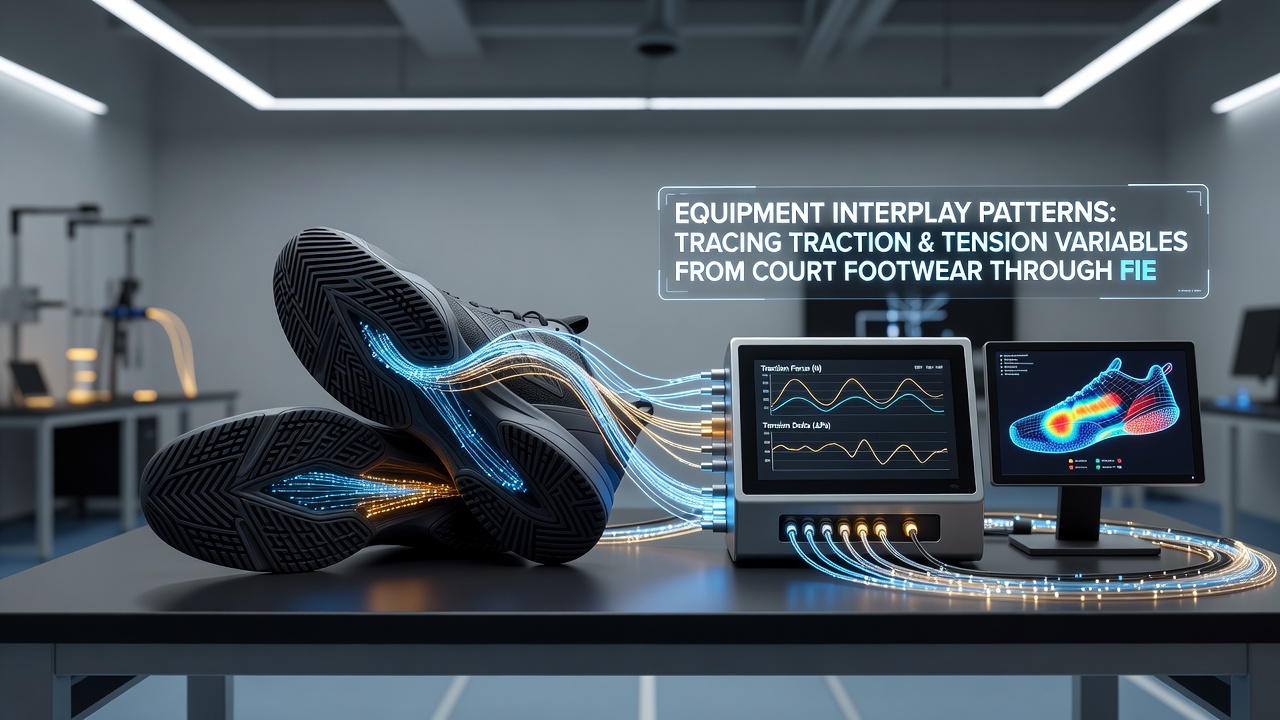
Modern monitoring relies on portable force plates, pressure insoles, and underwater motion capture systems that quantify variables in real time during surface transitions. These tools generate datasets that training staff review weekly, identifying when traction values fall below sport-specific thresholds or when fabric tension exceeds manufacturer guidelines. August 2026 training calendars from several national development centers incorporated these metrics into daily logs, enabling proactive swaps that kept athletes on schedule without unexpected equipment downtime. The resulting records also support predictive models that forecast replacement intervals based on individual movement signatures rather than generic usage estimates.
Conclusion
Equipment interplay patterns emerge clearly when traction and tension variables are measured across court footwear, field cleats, and water garments within unified training frameworks. Laboratories and field studies supply the quantitative basis for rotation schedules that preserve material integrity, while ongoing data collection refines replacement criteria. Athletes and support teams who apply these measurements consistently observe sustained performance across diverse environments without accelerated degradation in any single category.