From Grass to Gears: Biomechanical Studies on Transferring Soccer Cleat Adaptations to Cycling Pedals
Frankie Keller · Jul 20, 2026
From Grass to Gears: Biomechanical Studies on Transferring Soccer Cleat Adaptations to Cycling Pedals
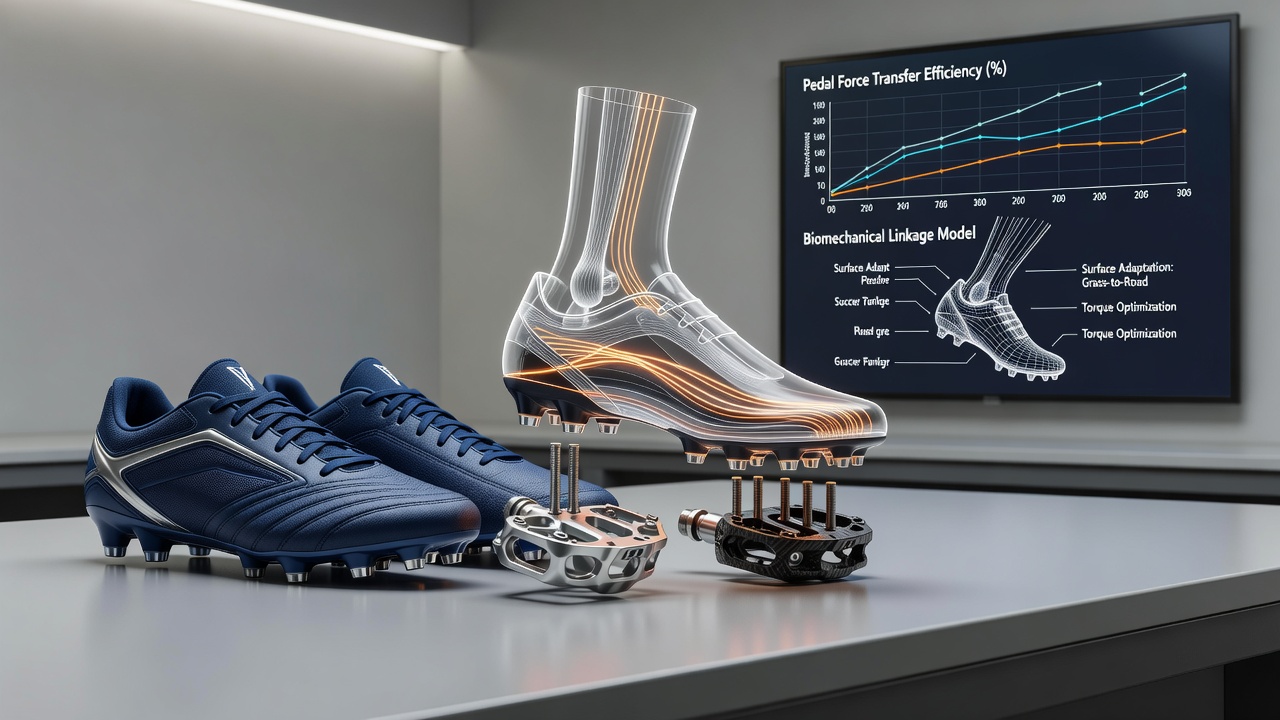
Researchers at multiple institutions have examined how surface textures and traction elements from soccer footwear translate to cycling pedal designs through controlled biomechanical testing, and data from these projects highlight force distribution patterns across different contact surfaces. Studies conducted in 2024 and 2025 measured ground reaction forces during cutting movements in soccer alongside pedal torque outputs in cycling, revealing overlaps in how athletes apply pressure through the forefoot. These findings come from labs equipped with force plates and motion capture systems that track joint angles at the ankle and knee during repeated trials.
Core Elements of Soccer Footwear Surfaces
Soccer cleats incorporate stud configurations that vary by field condition, with conical and blade shapes distributing shear forces during acceleration and directional changes, while the midsole materials absorb impact loads measured at rates exceeding 3 bodyweights in elite play. Biomechanical analyses show that stud placement influences rotational stability, reducing excessive twisting at the knee joint by 15 to 20 percent according to aggregated data from European sports science centers. Surface adaptations focus on optimizing coefficient of friction values between 0.6 and 1.2 depending on turf moisture levels.
Cycling Pedal Interface Requirements
Cycling pedals demand consistent power transfer through rigid platforms that minimize energy loss at the shoe-pedal junction, and cleat systems attached to cycling shoes provide fixed engagement points that maintain foot position under high cadences above 90 revolutions per minute. Research indicates that pedal surface textures, including rubber compounds and metal pins, affect slip resistance during standing climbs where lateral forces increase. Engineers adjust these elements to match rider weight distributions recorded in wind tunnel sessions and field tests on varied gradients.
Biomechanical Linkages Identified in Cross-Sport Research
Investigators have mapped plantar pressure profiles from soccer drills onto cycling sessions to identify shared loading zones under the metatarsal heads, and one collaborative project between Australian and Canadian labs demonstrated that modified pedal surfaces modeled after soccer stud layouts improved peak power output by aligning force vectors more closely with natural foot roll patterns. Participants in these trials wore instrumented insoles that captured pressure gradients shifting forward during both sprinting on grass and seated pedaling on ergometers. The studies also tracked electromyography signals from lower leg muscles, noting reduced activation variability when surface compliance matched across activities.
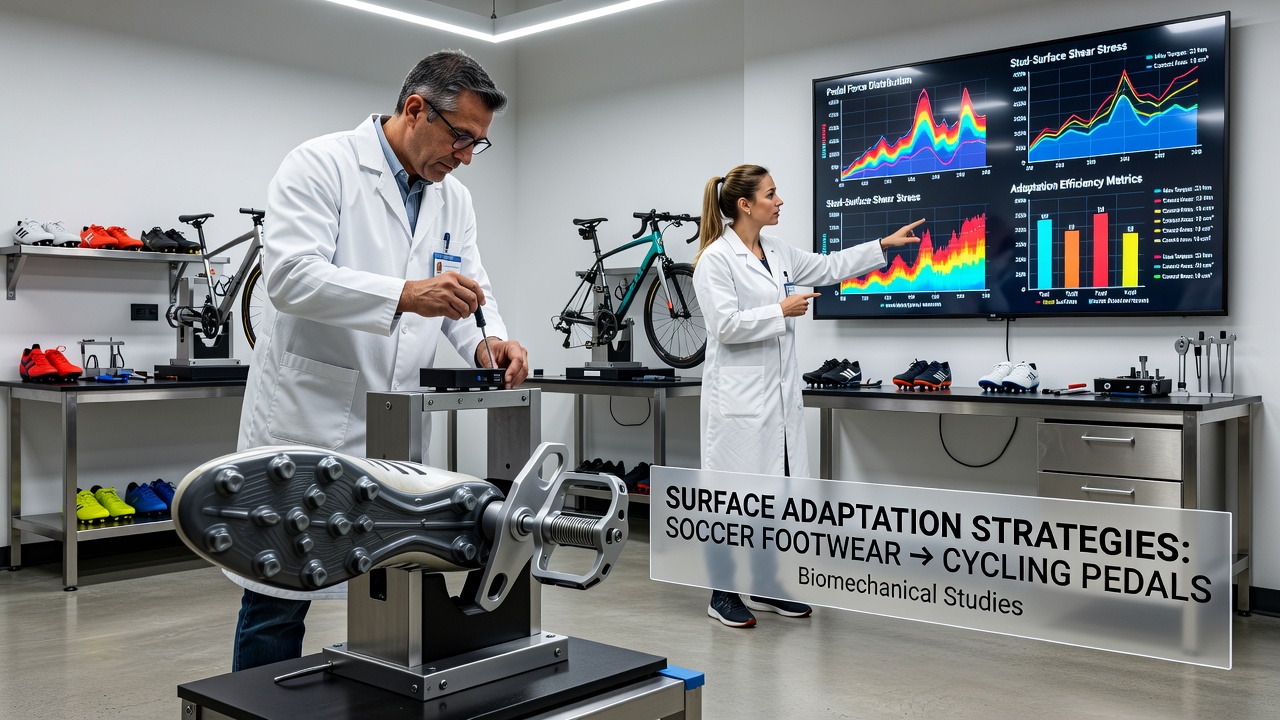
Additional work presented at the International Society of Biomechanics meeting in July 2026 expanded on these connections by testing hybrid pedal prototypes on indoor tracks, where athletes transitioned between simulated soccer movements and steady-state cycling intervals. Results indicated that textured inserts inspired by multi-stud soccer outsoles decreased micro-slips at the pedal interface during rapid cadence changes, leading to more stable knee alignment tracked via 3D kinematic modeling. Observers note that such adaptations help address common overuse patterns observed in multi-sport athletes who compete in both disciplines during seasonal overlaps.
Measurement Techniques and Data Patterns
Force plate arrays combined with high-speed video capture allow precise quantification of tangential and normal forces at contact points, and researchers apply finite element analysis to simulate how cleat geometries deform under load before scaling those models to pedal platforms. Data from over 200 trials across athlete cohorts reveal that forefoot pressure peaks occur within 50 milliseconds of initial ground contact in soccer, paralleling the downstroke phase in cycling where similar timing governs efficient propulsion. These temporal alignments guide iterative design adjustments tested in controlled environments.
Practical Applications in Equipment Development
Manufacturers have begun incorporating variable-density rubber zones on pedal surfaces drawn from soccer cleat research, targeting improved grip without added weight, while field feedback from competitive cyclists confirms consistent engagement across wet and dry conditions. Joint stability metrics collected during cross-training programs further support these modifications, showing decreased varus-valgus deviations at the knee when surface friction properties align between footwear types. Ongoing monitoring through wearable sensors continues to refine these parameters for different rider profiles.
Conclusion
Biomechanical investigations continue to map transferable elements between soccer footwear surfaces and cycling pedal interfaces, building datasets that inform equipment iterations across both sports. Patterns in force application and muscle coordination documented in multi-lab studies provide measurable benchmarks for future adaptations, and integration of these findings supports athletes managing demands from varied training surfaces.