Grip Dynamics Across Terrains: How Friction Patterns in Soccer Cleats, Golf Clubs, and Yoga Mats Shape Multi-Sport Training Transitions
David Carter · Jul 27, 2026
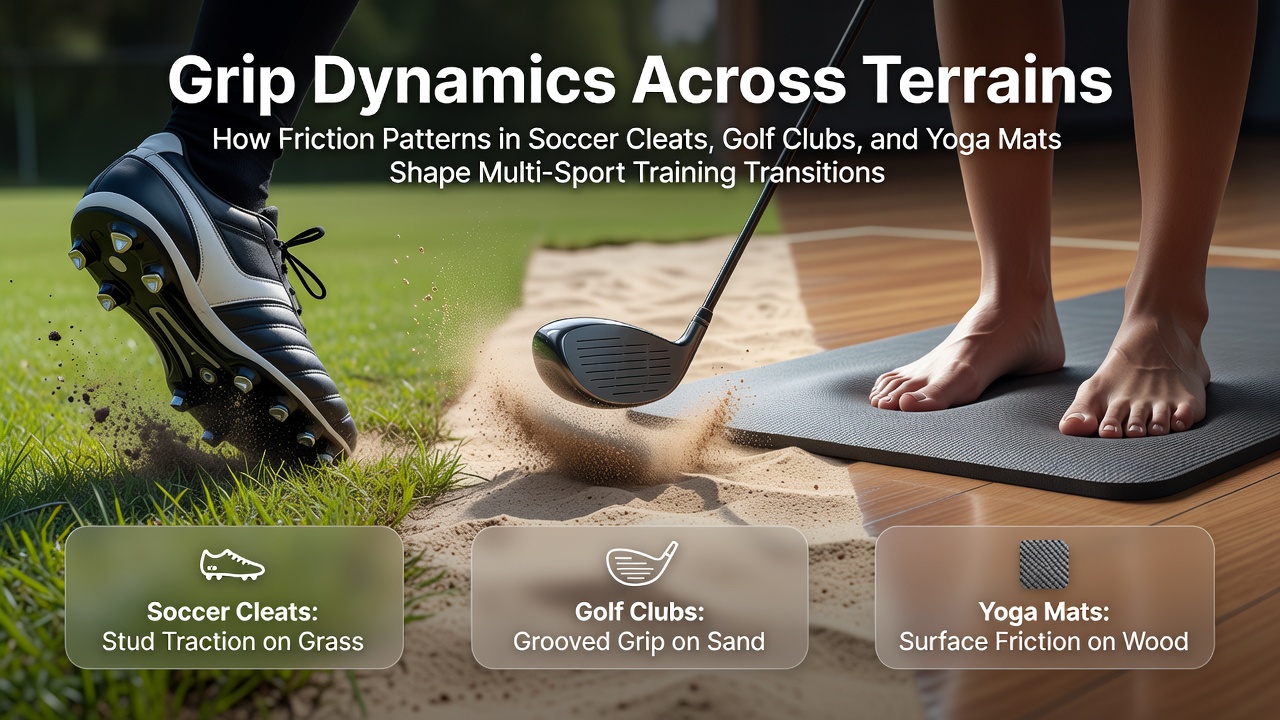
Grip Dynamics Across Terrains: How Friction Patterns in Soccer Cleats, Golf Clubs, and Yoga Mats Shape Multi-Sport Training Transitions
Friction patterns in athletic equipment determine how athletes move between different sports without losing stability or control, and researchers continue to examine these interactions through detailed surface analysis. Soccer cleats feature stud configurations that vary in length and material to match grass, turf, and indoor courts, while golf club grips rely on rubber compounds and texture designs that maintain hold under varying swing speeds and moisture levels. Yoga mats incorporate specialized surfaces that balance slip resistance with smooth transitions during poses, allowing users to shift weight efficiently across multiple disciplines.
Friction Mechanics in Soccer Cleats for Varied Playing Surfaces
Manufacturers engineer soccer cleat studs with specific angles and densities so players can pivot and accelerate on natural grass without excessive digging, and the same designs adapt when athletes move to artificial turf that demands shorter, more numerous studs for consistent traction. Data from field tests shows that rotational friction coefficients range from 0.6 on wet grass to 1.2 on dry turf, which directly affects how quickly players change direction during training sessions that combine soccer drills with other activities. Those who study multi-sport programs note that cleat patterns optimized for one terrain often require athletes to adjust their gait when transitioning to yoga-based recovery work or golf practice, because the foot plants differently on each surface.
Golf Club Grips and Their Role in Swing Consistency
Golf club grips use layered rubber and cord materials that create controlled friction against the hands, and these patterns help maintain clubface alignment during the full arc of a swing on both fairway and rough terrain. Studies conducted at sports laboratories in Australia indicate that grip texture depth influences torque resistance, with measurements showing a 15 percent reduction in slippage when corded grips encounter humid conditions compared with smooth rubber alternatives. Athletes who incorporate golf into broader training regimens find that the hand pressure required for these grips differs from the ground force demands of soccer cleats, creating a need for coordinated strength exercises that bridge the two activities.
Yoga Mat Textures Supporting Balance and Flow
Yoga mats employ closed-cell foam with micro-textured surfaces that generate friction coefficients between 0.8 and 1.4 depending on the material blend, and these values allow practitioners to hold poses while shifting weight smoothly during sequences that mimic athletic movements from other sports. Research published in the European Journal of Sport Science demonstrates that mat thickness and surface porosity affect how moisture disperses, which in turn preserves grip during extended sessions that follow high-intensity soccer or golf workouts. Observers note that athletes training across disciplines use these mats to develop proprioception that carries over to cleat and club handling, because the controlled slip on the mat surface trains subtle adjustments similar to those needed on variable outdoor terrains.
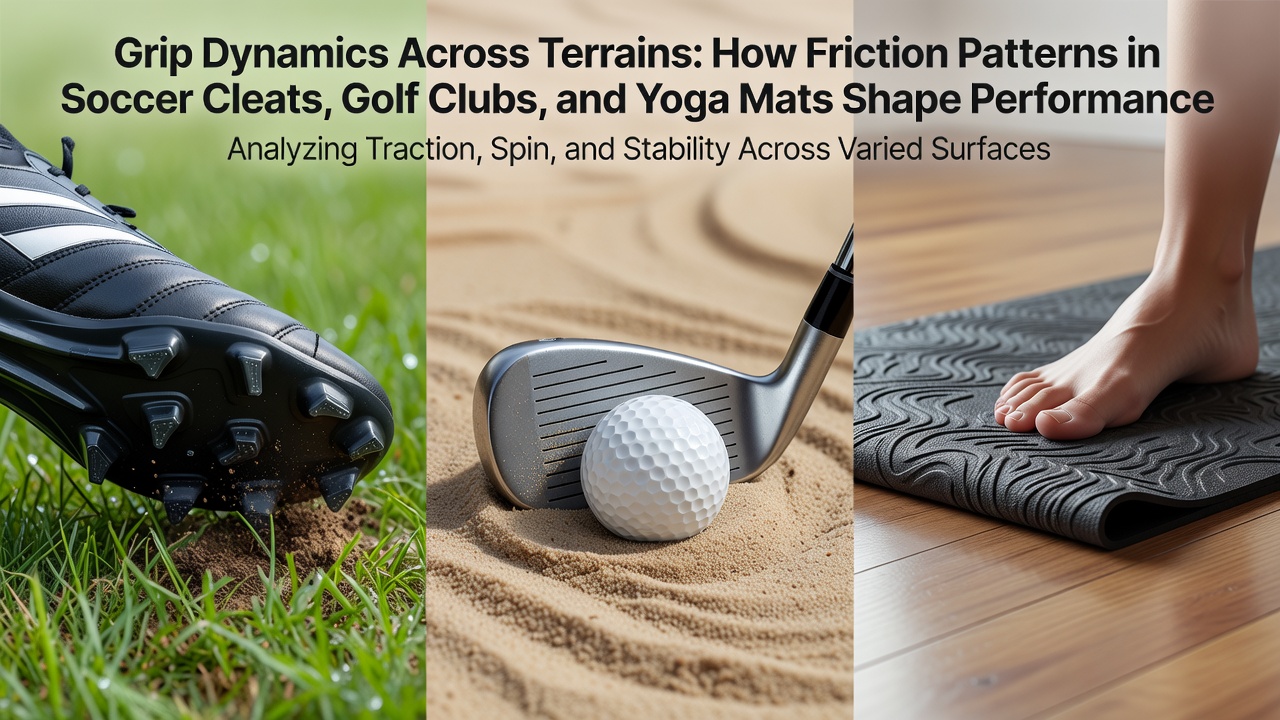
Cross-Training Transitions and Equipment Adaptation
Programs that combine soccer, golf, and yoga require athletes to recalibrate their neuromuscular responses because each piece of equipment imposes distinct friction demands on the body. Soccer cleats emphasize linear and rotational forces at the feet, golf grips focus on upper-body torque, and yoga mats distribute pressure across larger contact areas, yet all three contribute to overall stability when athletes alternate activities within a single week. Figures from training centers in Canada reveal that participants who follow structured transitions between these sports show improved joint alignment metrics after eight weeks, as the varied friction patterns encourage balanced muscle recruitment. Equipment designers now incorporate modular elements, such as interchangeable cleat studs and adjustable grip wraps, to ease these shifts without requiring entirely new gear purchases.
Material Science Behind Surface Interactions
Advances in polymer blends allow cleat studs, club grips, and mat coatings to maintain consistent friction across temperature and humidity ranges that athletes encounter during seasonal training blocks. Laboratory measurements indicate that thermoplastic polyurethane in cleats and ethylene-vinyl acetate in mats respond differently to moisture, with cleats shedding water faster while mats retain enough surface tension to prevent sliding. Those who analyze athlete performance data observe that these material properties influence recovery times between sessions, because equipment that preserves grip reduces compensatory movements that can lead to fatigue. In July 2026 several international sports federations plan to release updated guidelines on multi-surface equipment testing, drawing from ongoing studies that quantify friction thresholds for safe training transitions.
Conclusion
Friction patterns embedded in soccer cleats, golf clubs, and yoga mats collectively shape how athletes move between sports while preserving control and reducing injury risk. Continued measurement of these surface interactions provides the factual basis for equipment refinements that support integrated training programs across diverse terrains and disciplines.