Material Endurance Protocols for Sports Equipment in Varied Court and Field Conditions
David Carter · Jun 27, 2026
Material Endurance Protocols for Sports Equipment in Varied Court and Field Conditions
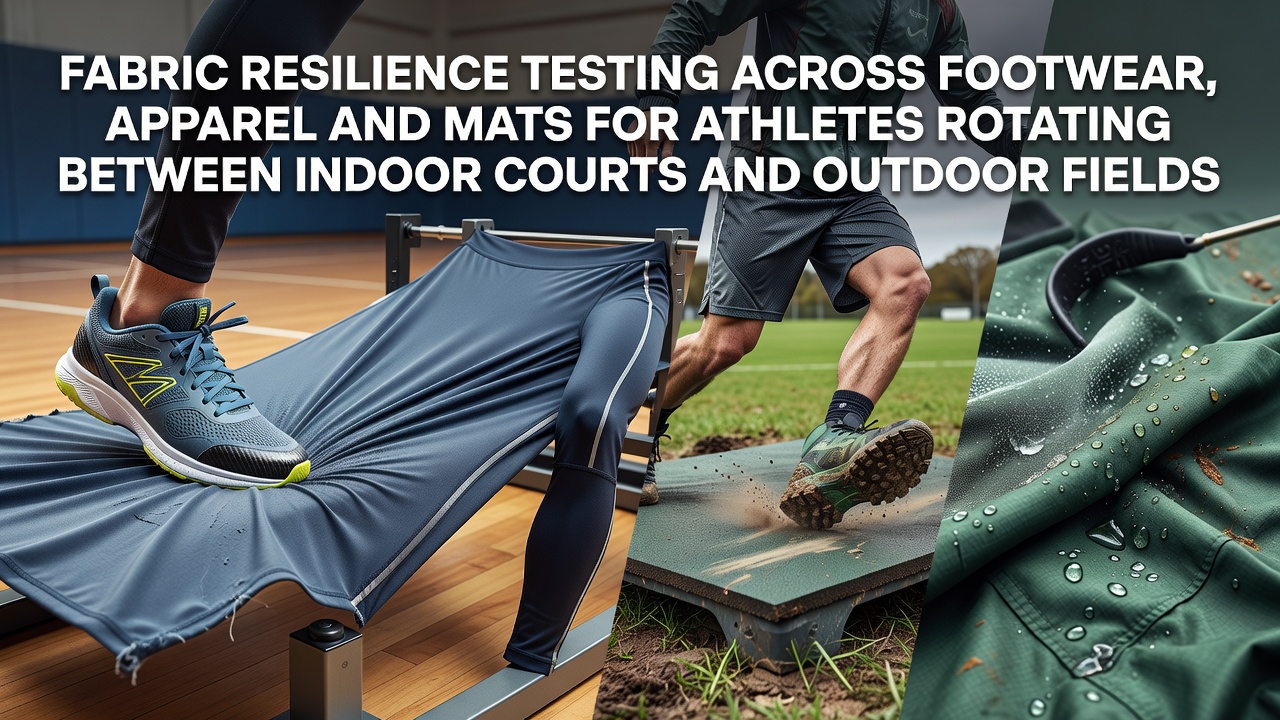
Researchers conduct fabric resilience testing to measure how materials in footwear, apparel, and mats withstand the demands of athletes who switch between indoor courts and outdoor fields on a regular basis. Data from multiple studies show that surface transitions accelerate wear through abrasion, moisture exposure, and temperature shifts, which is why standardized protocols focus on replicating those conditions in controlled lab settings.
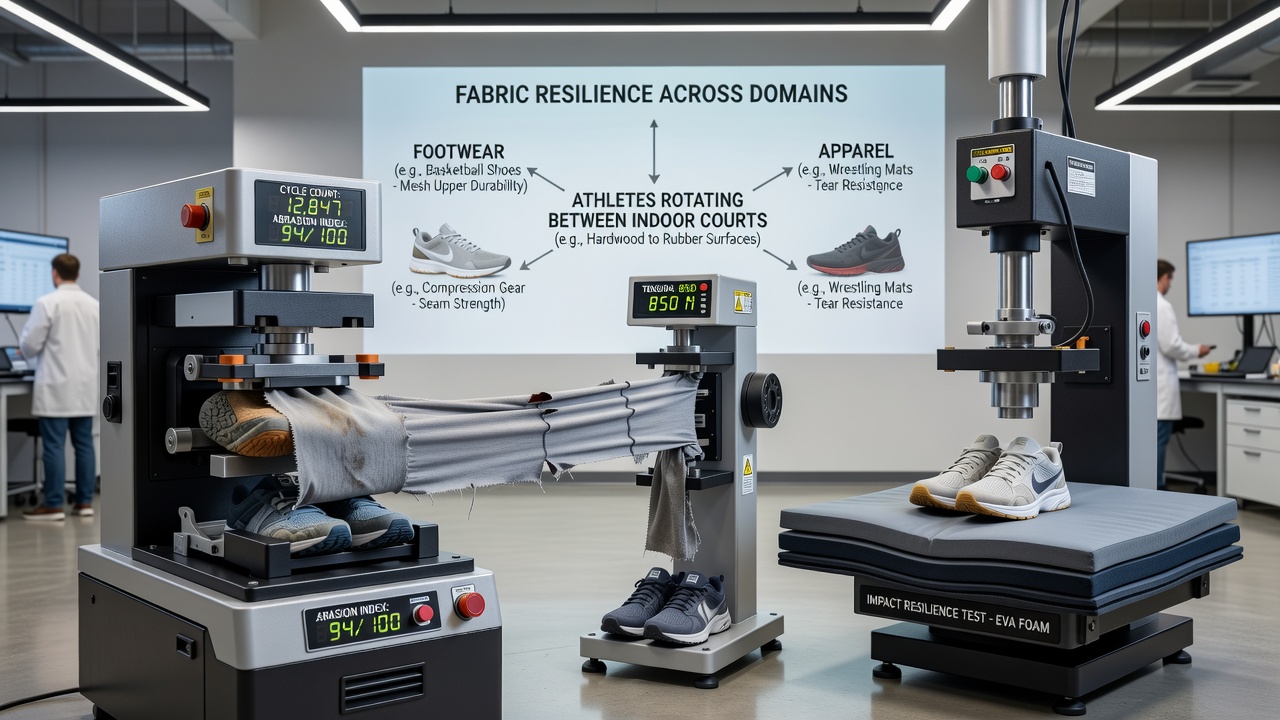
Testing begins with abrasion resistance measurements using devices that simulate repeated contact with hard court surfaces and softer grass or turf. Equipment applies consistent pressure while tracking fiber breakdown over thousands of cycles, and results indicate that certain synthetic blends maintain structural integrity longer than natural fibers when exposed to mixed environments. Tensile strength evaluations follow, where samples undergo stretching forces that mimic the pull from quick directional changes common in both basketball on indoor floors and soccer on outdoor pitches.
Footwear Material Assessments
Footwear testing centers on both uppers and outsoles because athletes rely on these components to handle friction differences between polished indoor courts and uneven outdoor fields. Upper materials face rubbing against socks and skin during lateral movements, while outsoles encounter grit and moisture that can degrade rubber compounds over time. Studies reveal that hybrid constructions combining reinforced synthetics with flexible meshes demonstrate improved longevity, especially when subjected to alternating wet and dry cycles that occur during seasonal training rotations.
Moisture management tests expose fabrics to simulated sweat and rain followed by drying phases, and measurements track how water absorption affects flexibility and breathability. Outdoor fields often introduce soil particles that embed in materials, whereas indoor courts contribute dust accumulation, so protocols incorporate particulate exposure to predict real-world performance. Observers note that footwear designed for multi-surface use frequently incorporates protective coatings, which researchers evaluate through accelerated aging techniques to forecast durability over extended periods.
Apparel Fabric Evaluations
Apparel resilience checks examine garments such as shorts, jerseys, and base layers that athletes wear across different venues. Friction from equipment like balls or pads combines with environmental factors including UV radiation outdoors and artificial lighting indoors, creating varied stress patterns. Data shows that polyester and nylon blends with integrated elastane maintain shape and color better under these conditions compared to untreated cotton options, particularly when tested for pilling and seam integrity after repeated wash cycles.
UV resistance assessments use exposure chambers that replicate sunlight intensity, while colorfastness trials measure fading rates under combined heat and moisture. Apparel must also resist tearing during high-impact activities that shift from controlled indoor environments to variable outdoor weather, and testing includes stretch recovery metrics to ensure garments return to original fit after deformation. Those who've analyzed performance data across seasons find that treated fabrics reduce the frequency of replacements for athletes maintaining rigorous schedules.
Mat Durability Examinations
Mats used for stretching, yoga, or recovery sessions undergo separate evaluations because they contact both indoor flooring and outdoor ground during athlete rotations. Surface grip, compression resistance, and edge wear receive focus since athletes place weight on mats in ways that vary by location. Compression tests apply repeated loads to assess how foam cores retain cushioning properties after exposure to temperature fluctuations between climate-controlled courts and open fields.
Edge fraying and delamination checks simulate the dragging and folding that occurs during transport between venues, and results highlight the benefits of reinforced backing layers in extending usable life. Antimicrobial treatments get evaluated for effectiveness against bacteria buildup from sweat in humid conditions, while slip resistance measurements ensure mats perform consistently on smooth indoor surfaces versus textured outdoor ones. Research indicates that multi-layer constructions with protective top coatings show measurable improvements in overall resilience metrics.
Standards and Testing Developments
International organizations establish guidelines that laboratories follow when conducting these assessments, and updates planned for implementation around June 2026 aim to incorporate more precise multi-surface simulation models. According to ASTM International resources on textile performance, standardized methods help manufacturers compare products across categories. A related report from the European Committee for Standardization outlines additional parameters for environmental exposure that complement existing abrasion and tensile protocols.
Equipment manufacturers apply findings from these tests to refine product lines, resulting in footwear with adaptive outsoles, apparel featuring zoned reinforcements, and mats with enhanced core stability. Athletes who train across venues benefit from gear that maintains consistent functionality, and ongoing data collection supports further refinements in material selection processes.
Conclusion
Fabric resilience testing provides essential measurements that guide the development of equipment capable of handling surface transitions for athletes. Through systematic evaluations of abrasion, tensile properties, moisture effects, and environmental exposures, researchers generate data that informs material choices across footwear, apparel, and mats. These protocols continue to evolve with new simulation techniques, ensuring that performance predictions align closely with the demands of indoor and outdoor training rotations.