Polymer Innovations Bridging Hydrodynamic Drag Reduction in Swimwear and Vibration Control in Tennis Rackets
Drew Hansen · Jun 13, 2026
Polymer Innovations Bridging Hydrodynamic Drag Reduction in Swimwear and Vibration Control in Tennis Rackets
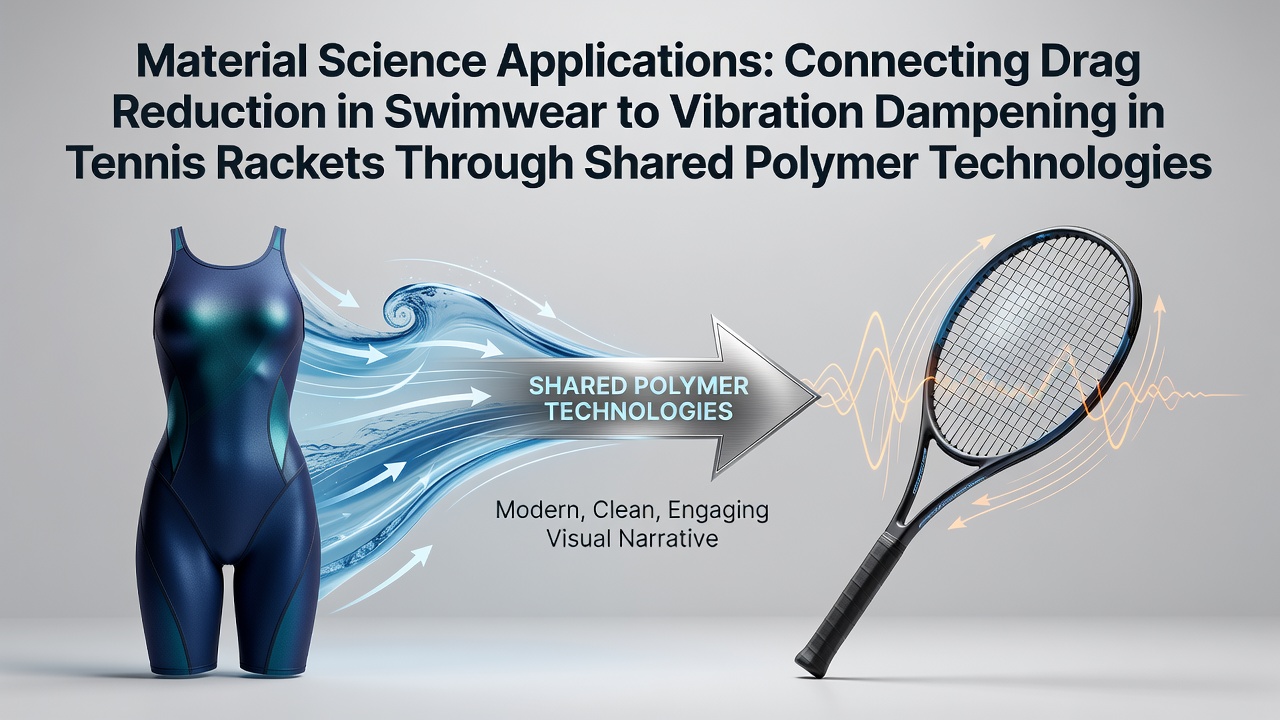
Material science continues to drive progress across multiple athletic disciplines through targeted polymer developments that address performance challenges in distinct environments. Researchers have identified common molecular structures that reduce fluid resistance in aquatic settings while simultaneously managing energy transfer in racquet-based activities, creating pathways for cross-application technologies. Data from industry reports indicate that specialized elastomers and composites now form the foundation for equipment modifications adopted by competitive swimmers and tennis players alike.
Core Polymer Properties in Athletic Equipment
Polymers such as polyurethane blends and silicone-modified thermoplastics exhibit viscoelastic characteristics that allow them to deform under stress and return to original shapes with controlled energy dissipation. These materials appear in layered constructions where molecular chains align to create anisotropic responses, meaning they behave differently along various axes. Studies conducted at European research institutions demonstrate that adjusting chain length and cross-linking density alters both surface interactions with water and internal damping coefficients in solid forms. Observers note that such tunability supports integration into textiles for swimwear as well as frame inserts for rackets without requiring entirely separate material families.
Drag Reduction Mechanisms in Swimwear
Competitive swimwear incorporates hydrophobic polymer coatings that minimize turbulent boundary layer formation when athletes move through water at high velocities. These coatings, often based on fluorinated or siloxane polymers, reduce skin friction drag by promoting laminar flow patterns along fabric surfaces. Research indicates that micro-textured polymer films applied to suit exteriors can lower overall resistance by measurable percentages during elite-level events, with data collected from timed trials showing consistent improvements across multiple stroke types. Manufacturers apply these layers through plasma deposition processes that bond the polymers at the nanoscale, ensuring durability through repeated exposure to chlorinated environments and mechanical stretching.
Vibration Dampening Approaches in Tennis Rackets
Tennis racket frames utilize polymer inserts positioned near the throat and handle regions to absorb oscillatory energy generated upon ball impact. Materials with high loss tangents convert kinetic energy into heat through internal friction within the polymer matrix, thereby reducing transmitted vibrations to the player's arm. Engineers select copolymers that maintain stiffness in the primary structure while providing localized compliance in damping zones, a balance achieved through phase-separated morphologies where soft segments handle energy absorption and hard segments preserve structural integrity. Field measurements from professional tournaments reveal that optimized polymer placements correlate with decreased peak acceleration values recorded at the grip during forehand and backhand strokes.
Shared Technological Foundations
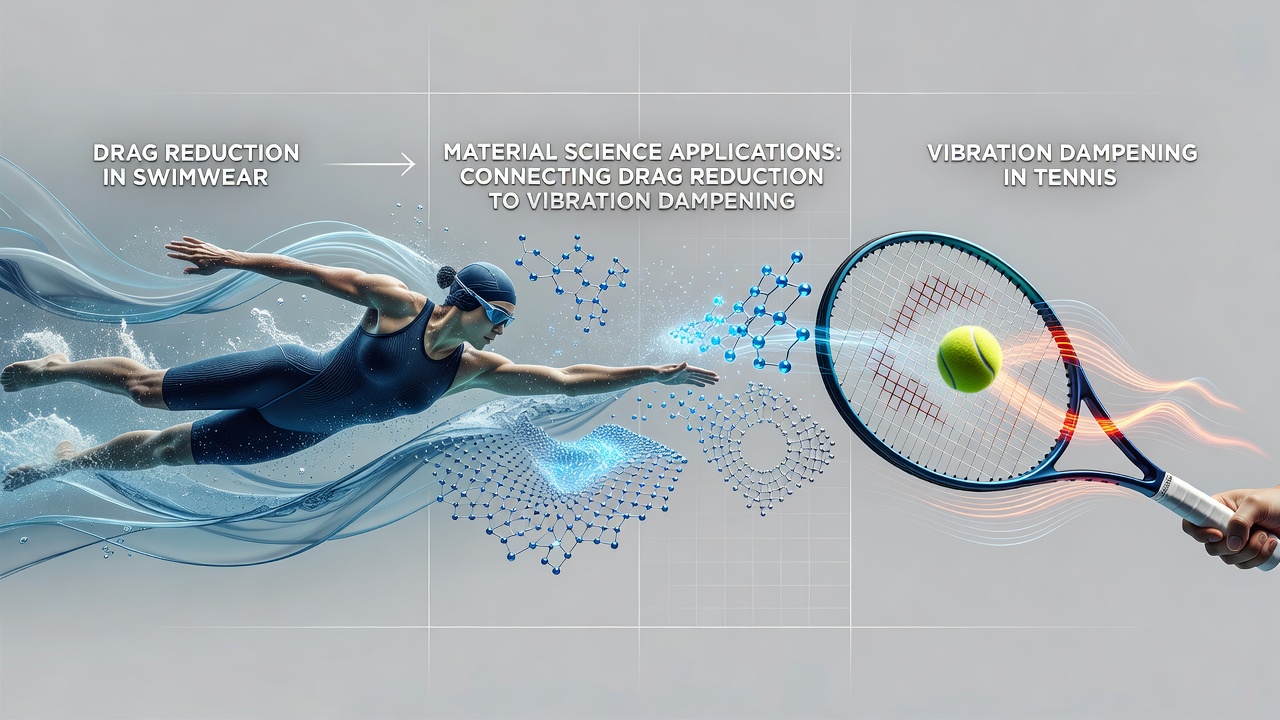
The connection between these applications stems from polymer formulations that simultaneously manage interfacial energy and bulk mechanical responses. In swimwear, surface energy modification prevents water adhesion, while in rackets the same base chemistry enables controlled deformation under dynamic loading. Shared additives such as nanoparticles enhance both hydrophobicity for aquatic use and energy dissipation rates for impact scenarios, allowing suppliers to develop masterbatches adaptable to either textile extrusion or composite molding processes. According to reports from the National Institute of Standards and Technology, standardized testing protocols for viscoelastic properties facilitate direct comparison of performance metrics across these seemingly unrelated product categories.
Developments reported in June 2026 from collaborative projects between academic labs and equipment producers highlight new block copolymer architectures that further unify these functions. These structures incorporate responsive segments that adjust their configuration based on environmental conditions, such as hydration levels in swimming pools or temperature fluctuations during outdoor matches. Integration of such adaptive polymers supports equipment that maintains consistent behavior across varying competition settings without manual adjustments by athletes or support staff.
Manufacturing and Testing Parallels
Production techniques overlap significantly, with both swimwear panels and racket components relying on precision molding and coating methods that preserve molecular orientation. Quality assurance procedures include rheological analysis to verify flow behavior during processing and dynamic mechanical analysis to quantify damping performance under simulated use conditions. Figures from international standards organizations show that certification requirements for material consistency have encouraged suppliers to adopt unified quality frameworks applicable to multiple sports sectors simultaneously.
Case examples include one manufacturer that adapted a polymer originally formulated for swim cap seals into vibration strips for racket grips, achieving comparable reductions in unwanted motion transfer. Another instance involves fabric treatments developed for full-body suits that informed surface finishes on composite racket faces, where reduced friction during string-bed interactions contributed to more predictable ball trajectories. These transfers occur because the underlying polymer physics remains constant even as final product forms diverge.
Conclusion
Polymer technologies continue to link drag reduction strategies in swimwear with vibration management solutions in tennis rackets through deliberate material design choices. Evidence from laboratory characterizations and on-field data confirms that targeted adjustments to molecular architecture deliver measurable benefits in both contexts. Ongoing refinements in June 2026 and beyond suggest further convergence as testing methods and production capabilities align across the sports equipment industry.