The Science Behind Cushioning Technologies in Running Shoes, Soccer Cleats, and Cycling Equipment
Drew Hansen · May 16, 2026
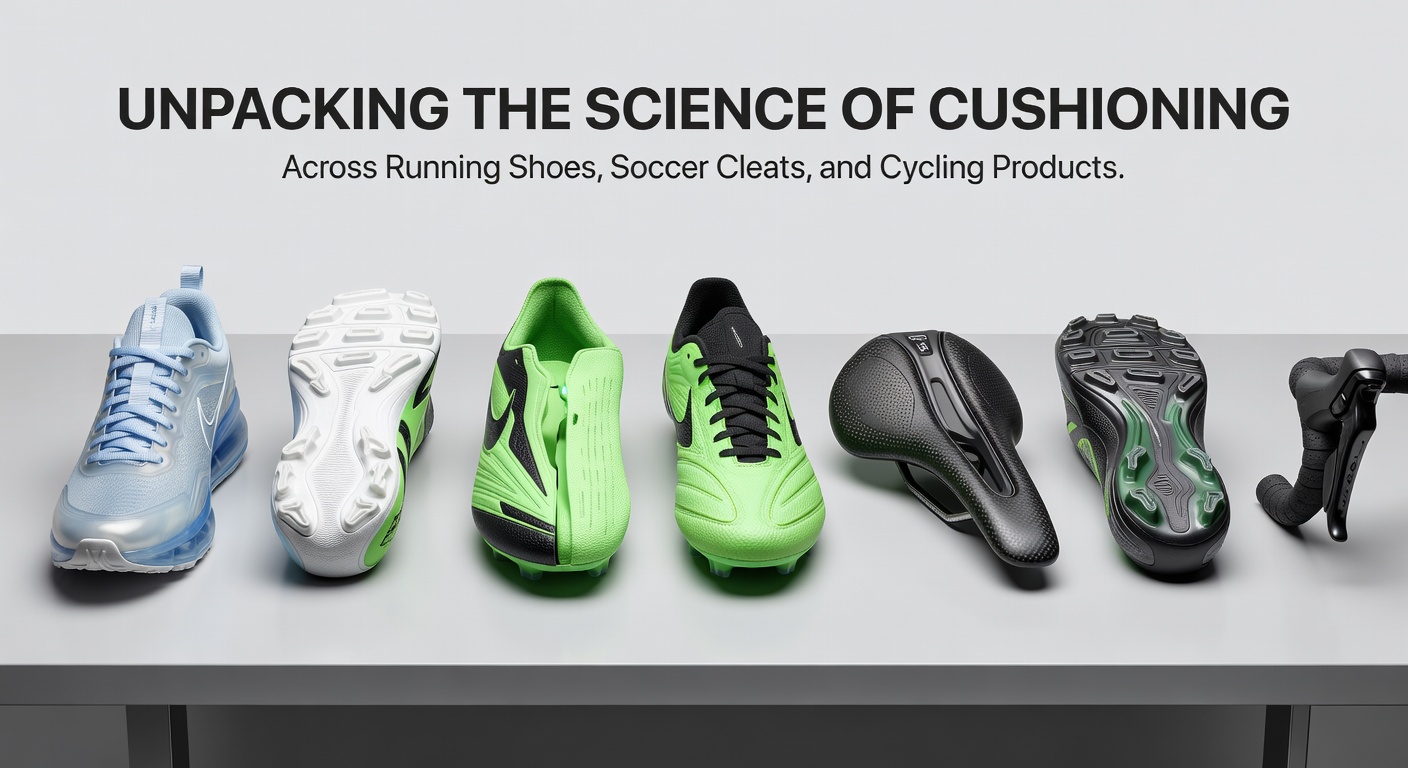
The Science Behind Cushioning Technologies in Running Shoes, Soccer Cleats, and Cycling Equipment
Researchers have mapped the ways modern cushioning systems manage repetitive impact forces that range from two to five times body weight in running and similar activities, and data from biomechanical studies show these systems rely on foams, air units, and gel inserts that deform and recover during each stride. Engineers design these components to balance energy return with shock dispersion, while material scientists continue testing polymers that maintain consistent performance across temperature variations and repeated compressions.
Core Principles of Impact Management in Athletic Gear
Studies in sports biomechanics indicate that effective cushioning reduces peak ground reaction forces transmitted through the skeletal system, and laboratories measure these reductions using force plates adn high-speed cameras that capture deformation rates in real time. Midsole compounds such as ethylene-vinyl acetate and thermoplastic polyurethane appear most frequently because they offer tunable density levels that manufacturers adjust for specific movement patterns. Observers note that thinner, firmer layers often sit closer to the foot for stability, whereas thicker, softer sections occupy the outer zones to handle initial contact.
Running Shoe Developments and Performance Data
Running footwear incorporates stacked cushioning units that compress sequentially from heel strike through toe-off, and recent models feature nitrogen-infused foams that expand under load yet rebound quickly to limit energy loss. Longitudinal research tracks how these foams retain at least 70 percent of their original resilience after 500 kilometers of use, according to wear tests conducted by independent testing facilities. Athletes who log high weekly mileage often select shoes with segmented cushioning pods that adapt to varying stride lengths, and gait analysis labs confirm these designs lower loading rates at the knee joint by measurable percentages.
Specialized Cushioning Approaches in Soccer Cleats
Soccer cleats integrate thinner cushioning layers beneath the forefoot and heel because players require direct ground feel for quick directional changes, yet manufacturers still embed responsive foams that absorb studs-up impacts during tackles and landings. Data collected from professional match footage and pressure-mapping insoles reveal that forefoot zones experience the highest repetitive loads, prompting designers to place firmer EVA inserts precisely where metatarsal heads contact the plate. Studies conducted across European and South American leagues show that players wearing updated cushioning configurations report fewer complaints of plantar discomfort after extended matches, though individual foot shapes continue to influence final fit selections.
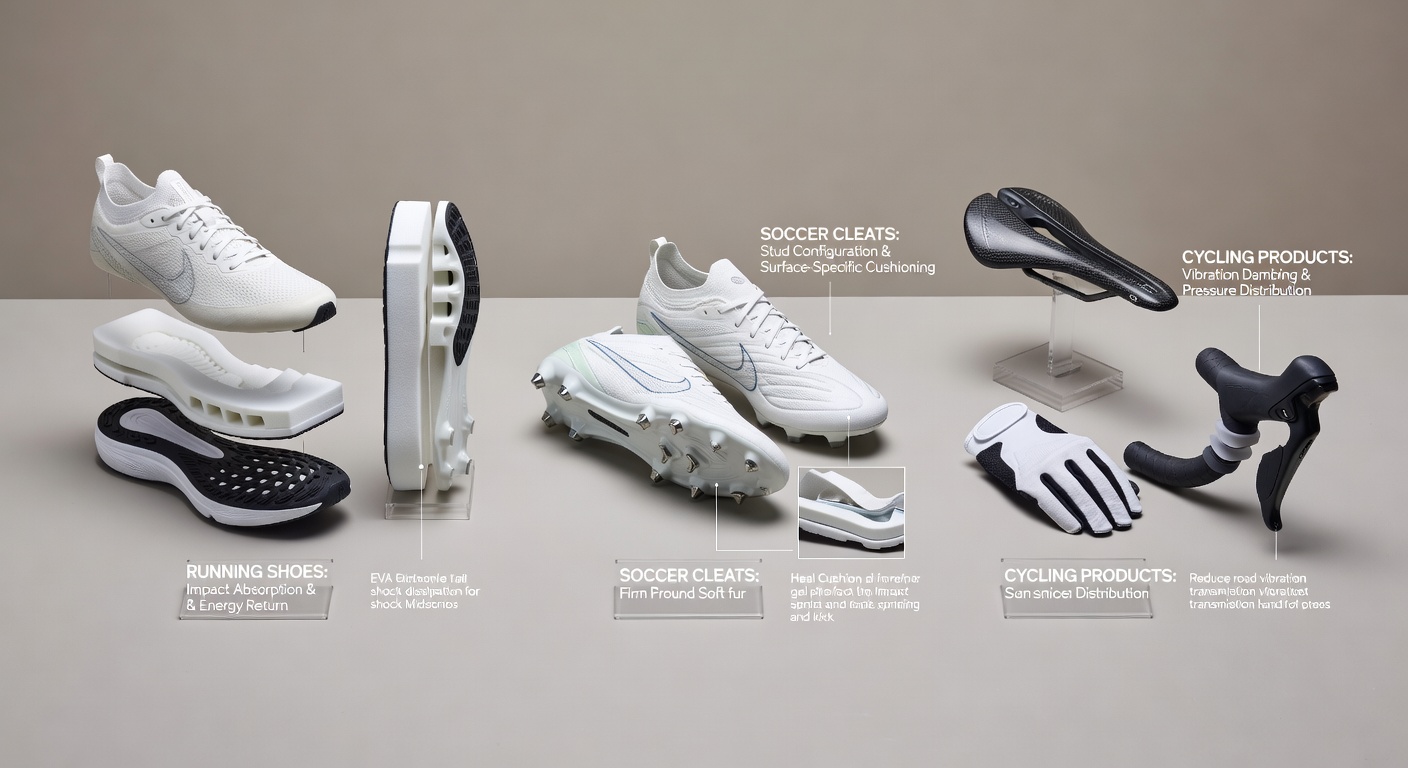
Cushioning Integration in Cycling Footwear and Contact Points
Cycling shoes channel power through stiff carbon plates while incorporating targeted cushioning zones under the metatarsal heads and heel, and these zones prevent hot spots during long rides without compromising the rigid sole needed for efficient force transfer. Industry reports from the International Cycling Union highlight that saddle designs now pair with shoe cushioning to distribute pressure across multiple contact areas, reducing localized loading on the sit bones and forefoot simultaneously. Engineers test these combined systems in wind-tunnel facilities and on instrumented trainers, measuring how small changes in foam thickness affect both comfort metrics and power output consistency over multi-hour efforts.
Comparative Testing and Material Evolution Trends
Comparative trials place running shoes, soccer cleats, and cycling footwear on identical impact rigs to quantify energy absorption rates, and results demonstrate that running models typically dissipate the largest absolute forces while cleats prioritize lateral stability over vertical compression. Cycling products emphasize durability under sustained moderate loads rather than peak impacts, leading to hybrid rubber and foam compounds that resist abrasion from pedal interfaces. As of May 2026, several brands have introduced bio-based cushioning foams derived from castor oil and sugarcane, with pilot data indicating comparable resilience to petroleum-derived alternatives and lower carbon footprints during production.
One research team at an Australian sports institute tracked professional runners, soccer players, and cyclists across a full season and found measurable correlations between cushioning stiffness gradients and reduced markers of muscle fatigue in post-activity blood samples. Another investigation from a Canadian university biomechanics program used finite element modeling to predict how different midsole geometries alter stress distribution through the plantar fascia, providing manufacturers with design parameters that shorten development cycles. These studies rely on standardized protocols that control for temperature, humidity, and loading frequency, ensuring results translate across laboratory adn field conditions.
Conclusion
Cushioning science continues to advance through iterative testing that links material properties directly to measured reductions in joint stress and improvements in movement efficiency across running, soccer, and cycling. Manufacturers apply findings from force-plate studies and wear trials to refine layer placements and compound formulations, while ongoing work with sustainable polymers suggests future products will maintain performance standards alongside environmental considerations. Athletes and equipment developers alike benefit from this accumulating body of data that clarifies how specific cushioning choices influence both immediate comfort and long-term musculoskeletal health.