Tracing Grip and Texture Evolutions from Golf Club Handles to Basketball Footwear Soles and Their Effects on Handling Precision in Multi-Discipline Athletes
Drew Hansen · Jul 11, 2026
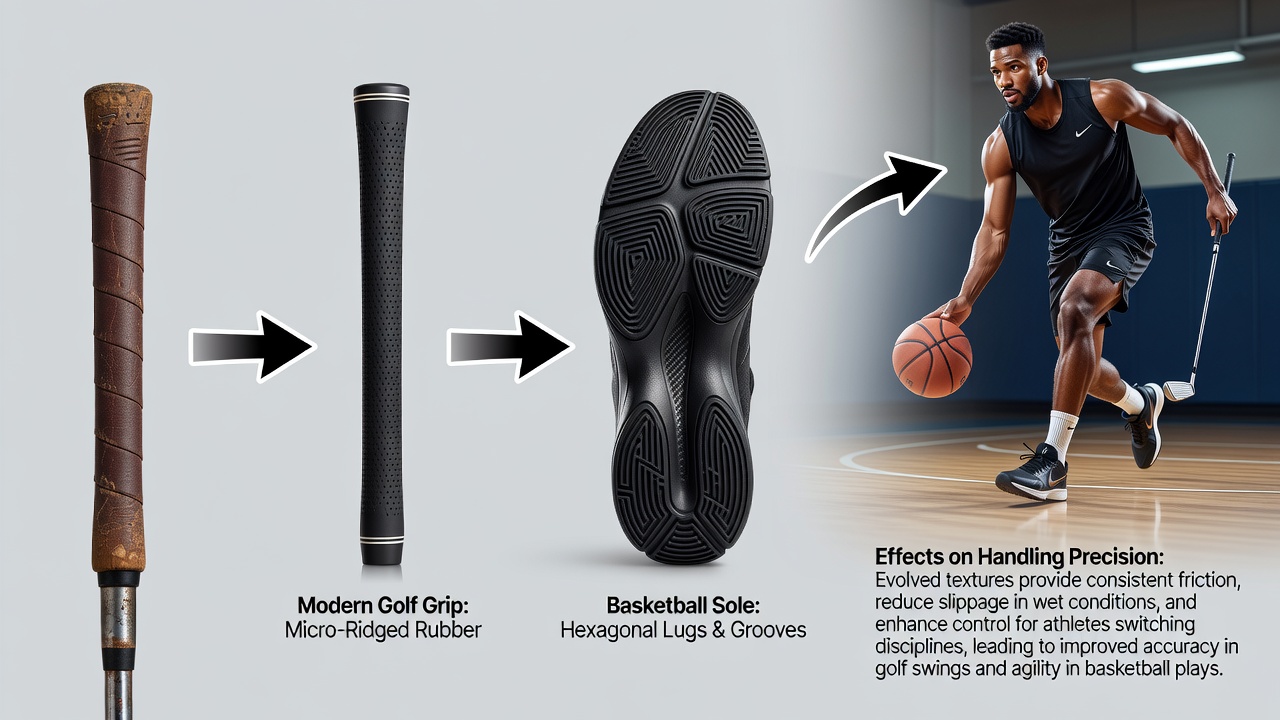
Tracing Grip and Texture Evolutions from Golf Club Handles to Basketball Footwear Soles and Their Effects on Handling Precision in Multi-Discipline Athletes
Equipment designers have tracked changes in surface textures across sports for decades, and the path from golf club handles to basketball footwear soles reveals consistent patterns in how materials influence control. Early golf grips relied on leather wraps that provided basic friction, yet manufacturers shifted toward rubber compounds by the mid-20th century to improve durability under repeated swings. These adjustments created finer ridges and tacky surfaces that reduced slippage during club rotation, a development documented in equipment patents filed through the 1980s.
Researchers at sports engineering labs observed that similar texture principles later appeared in basketball shoe soles, where herringbone and zig-zag patterns replaced smoother rubber bases. The transition occurred as athletes demanded better lateral stability during quick cuts, and data from performance labs showed measurable gains in directional changes when sole grooves increased surface contact by 15 to 20 percent. Multi-discipline competitors who train in both golf and basketball often notice how grip familiarity from one activity carries over, since hand and foot feedback loops share neural pathways that support consistent pressure application.
Material Shifts Across Decades
Golf club handle evolution accelerated once synthetic polymers entered production lines in the 1990s, replacing natural leather with compounds that maintained tackiness across temperature ranges. Studies conducted at the German Sport University Cologne indicated that these polymers lowered torque variation during swings by limiting micro-slips at the hand-shaft interface. Basketball footwear followed a parallel route when manufacturers introduced multi-density rubber outsoles in the early 2000s, allowing separate zones for forefoot grip and heel cushioning. Figures from the Australian Institute of Sport reveal that athletes using updated sole textures recorded tighter turn radii during agility drills, with average completion times dropping by fractions of a second in controlled tests.
Texture depth and spacing became key variables once high-speed cameras captured foot placements at 1000 frames per second. Engineers adjusted groove angles so that edges aligned with typical pivot directions, and this refinement mirrored earlier golf grip modifications that aligned ridges with finger pressure points. Those who've examined cross-sport data note the shared emphasis on anisotropic friction, where resistance differs by direction to support both stopping power and smooth release.
Impact on Multi-Discipline Athletes
Athletes who compete across golf and basketball face unique challenges because handling precision depends on rapid adaptation between upper and lower body surfaces. Research teams tracking participants in combined training programs found that grip texture consistency between club handles and shoe soles correlated with improved shot accuracy and dribble control. One longitudinal project released preliminary results in July 2026 showing that athletes exposed to matched texture profiles maintained steadier force application across both sports during high-volume sessions.
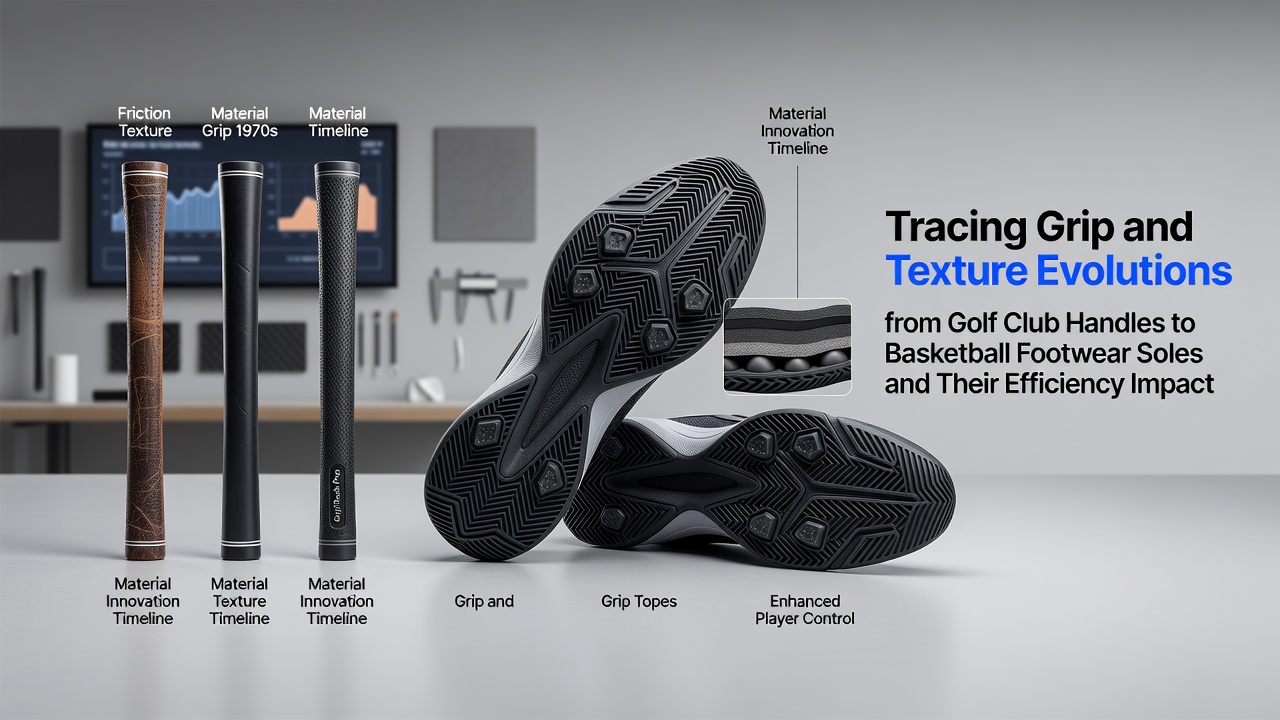
Performance metrics collected through wearable sensors demonstrate that texture familiarity reduces the cognitive load required for equipment adjustment. When sole patterns echo the micro-ridges found on updated golf grips, foot placement becomes more automatic during defensive slides or jump stops. Data indicates these athletes exhibit lower variance in ground reaction forces, which in turn supports tighter ball handling sequences without compensatory movements at the ankles or wrists.
Texture Parameters and Precision Outcomes
Key measurements include coefficient of friction values, groove width, and material hardness ratings, all of which manufacturers tune through iterative testing. University-led experiments in Canada compared standard and modified basketball soles on athletes with prior golf experience, recording that modified textures improved 180-degree pivot stability by measurable margins. The same parameters applied to golf grip redesigns produced parallel reductions in club-face rotation errors during putting strokes. Observers note that these overlaps arise because both sports require precise modulation of normal force against a surface that must resist shear in multiple planes.
Equipment testing protocols now incorporate cross-discipline trials to verify that changes in one domain do not degrade performance in another. Labs measure contact area percentages, slip thresholds, and recovery times after directional shifts, then feed results back into design cycles. Such integrated approaches help explain why texture refinements originally developed for golf handles have accelerated basketball sole innovations in recent product generations.
Conclusion
Equipment evolution continues to link grip and sole textures through shared engineering priorities centered on friction control and directional stability. Studies across multiple research centers confirm that athletes who train in both golf and basketball benefit when texture parameters align, as these alignments support consistent handling precision regardless of whether force originates from hands or feet. Ongoing data collection through 2026 and beyond will likely refine these connections further as sensor technology captures finer details of athlete-equipment interaction.